Arkaim, Bronze Age settlement in Chelyabinsk Oblast, Russia
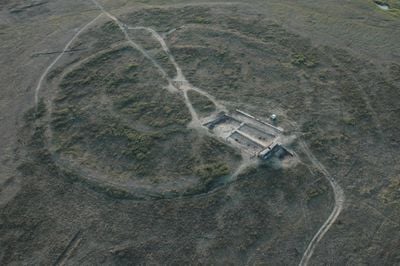
Arkaim is a fortified Bronze Age settlement in Chelyabinsk Oblast, built as two concentric rings of adobe-and-timber walls, 143–145 m and 85 m in diameter, with four entrances aligned to the cardinal points. About sixty trapezoidal dwellings of 110–180 m² opened onto a circular wooden-paved street with a covered drainage gutter, and a roughly 25 m open space lay at the centre. Today low earthen banks enclose two flat, pale grey excavated rectangles beside a straight ridge and an unpaved track.
The settlement arose about 4,000 years ago and was inhabited for a few centuries before its residents left. It was only discovered in the late 1980s, just before a planned reservoir would have flooded the area.
The name Arkaim comes from a Turkic word for "ridge" or "back", taken from a hill 4 km south of the settlement rather than from the nearby village. Excavations found traces of metallurgical production in the dwellings, and the site is now part of the historical and archaeological centre "Arkaim" created in 1991.
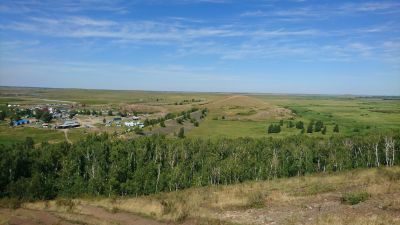
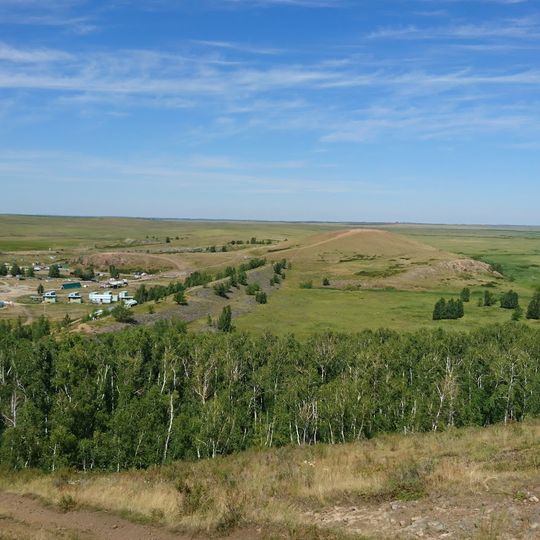
The site lies far out in the steppe, so a personal vehicle or organized tour is needed. The best time to visit is during summer when the paths are dry and the days are long.
The four gates of the circle follow the cardinal directions and let the sunlight fall directly through the openings on certain days of the year. This arrangement likely helped residents determine seasons and festival days.
The community of curious travelers
AroundUs brings together thousands of curated places, local tips, and hidden gems, enriched daily by 94,232 contributors worldwide.