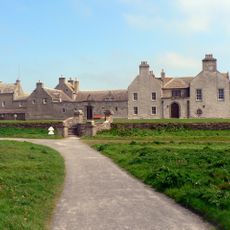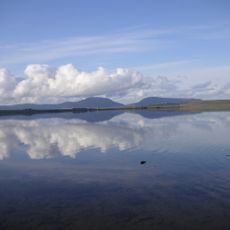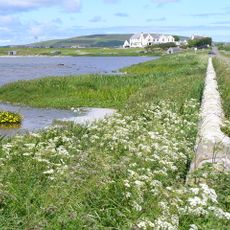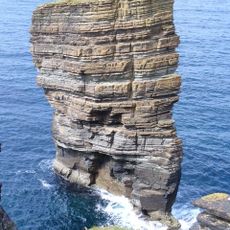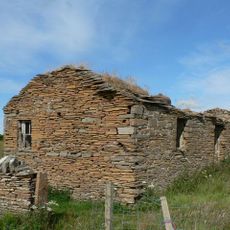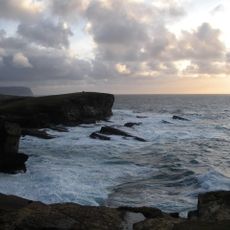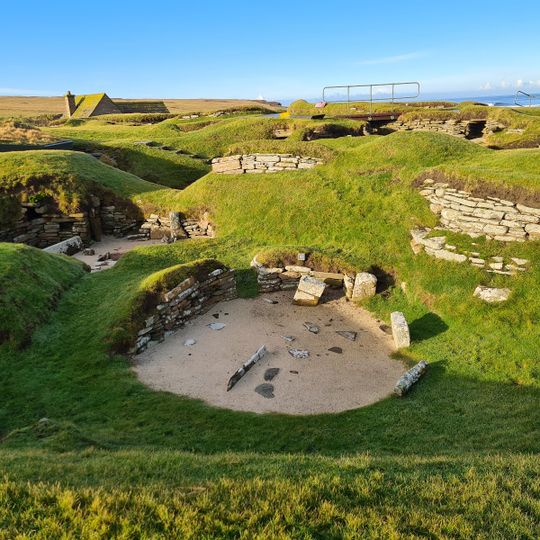
Skara Brae, Neolithic settlement in Mainland, Orkney Islands, Scotland
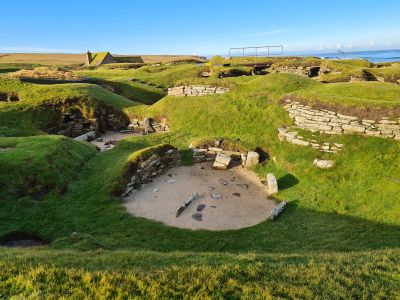
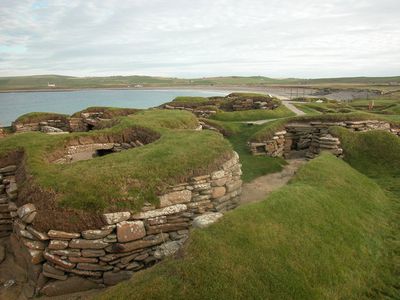
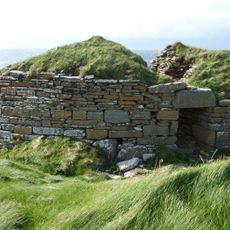
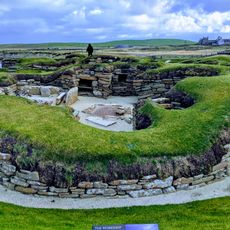
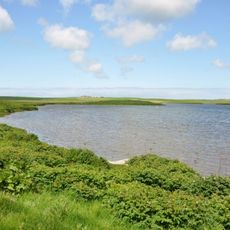
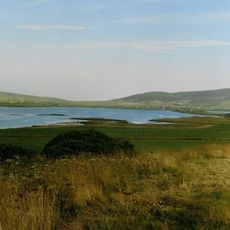
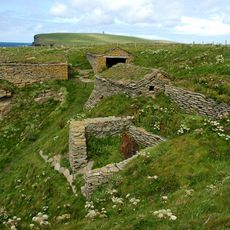
Skara Brae is a Neolithic stone village on the Bay of Skaill, Mainland, Orkney, with ten stone structures and four passageways visible. The rectangular houses, built of flat stacked stone slabs and insulated with midden, have central hearths, stone beds and dressers, and low slab-lined passages; no roofs remain.
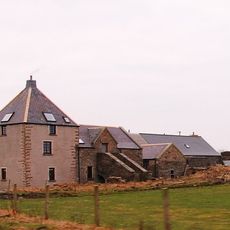
In the winter of 1850 a severe storm stripped earth from a knoll at the Bay of Skaill, revealing roofless stone houses. William Graham Watt of Skaill House began excavations that were abandoned in 1868 after four houses were uncovered. The site was occupied from about 3180 BC to around 2500 BC.
The name Skara Brae comes from Old Norse and Scots: brae means "slope" or "hillside", and Skara derives from early forms like Skerrabra, the grassy mound that covered the buried village. Inside, a stone dresser stands against the wall opposite each door, the first thing anyone entering sees, with a larger bed on the right and a smaller one on the left.
The site opens daily from 9:30, with closing at 17:30 in summer and 16:30 in winter. The walkway follows raised paths that allow a clear view into the homes without entering the structures.
In each house, channels carried wastewater to a central drain beneath the corridors, a system that kept the living spaces clean. Entrances could be locked from inside with stone bars, suggesting a need for privacy or security.
The community of curious travelers
AroundUs brings together thousands of curated places, local tips, and hidden gems, enriched daily by 92,130 contributors worldwide.