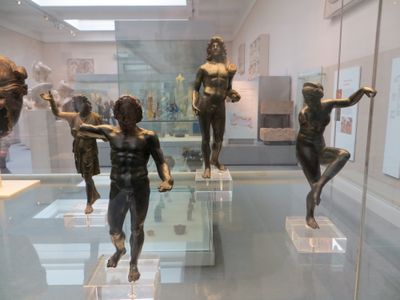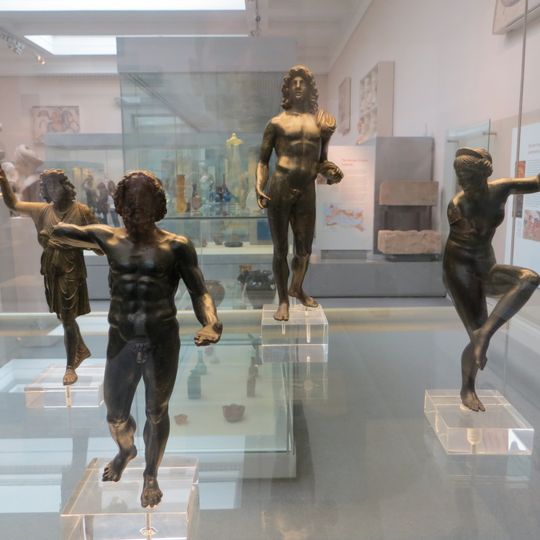
Paramythia Hoard, Ancient bronze collection at British Museum, United Kingdom.
The Paramythia collection consists of nineteen bronze figures depicting Greek and Roman deities, created using lost wax casting during the second century AD. The British Museum currently displays fourteen sculptures from this collection, including twelve pieces from Richard Payne Knight and two additional statuettes from John Hawkins' widow.
Workers discovered these bronze figures in the 1790s near Paramythia in northwestern Greece and initially sent them to Russia. The collection eventually made its way to England and now forms part of the British Museum's holdings.
These bronze figures belonged to a lararium, a household shrine where people regularly worshipped their chosen gods as part of daily life. The statuettes show how faith and spirituality were woven into Roman domestic practice.
The collection is on display at the British Museum in central London and is easily accessible to visitors. Plan time to examine each statuette closely, as fine details and surface work can be observed directly.
Many of the bronze figures still bear visible traces of earlier gilding and mounted decorative elements, revealing their original splendor. These remnants show the craftsmanship techniques Roman artisans used when they created household treasures.
The community of curious travelers
AroundUs brings together thousands of curated places, local tips, and hidden gems, enriched daily by 91,972 contributors worldwide.