Parga Castle, Medieval fortress on a hill in Parga, Greece.
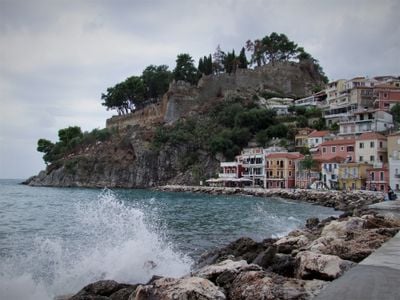
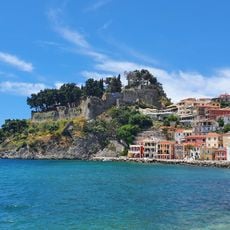
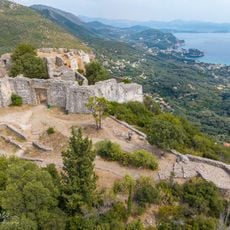
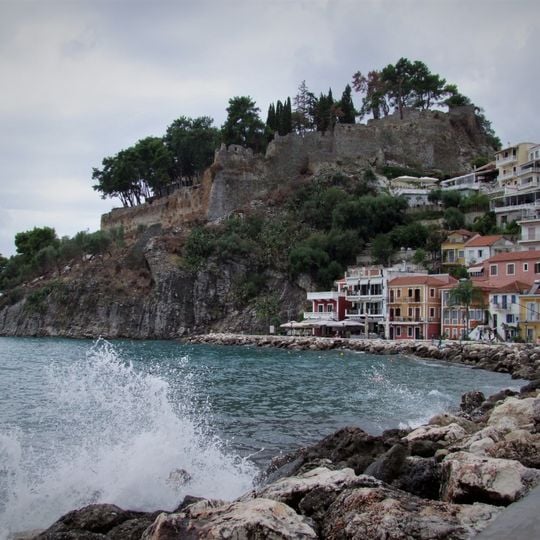
Parga Castle occupies the crest of a rocky peninsula above the town, its walls of rough light-grey and tan stone following the hilltop and stepping down toward the right. No roofed building survives; broken wall lines stand against the sky, with a curved section rising on the left and a taller, more intact stretch above a cluster of trees on the right. Below the walls, bare rock and scrub cover the slope.
Venetian builders constructed the current fortress in the 16th century after repeated pirate attacks and invasions had destroyed earlier fortifications. This new structure was designed to better defend against mounting threats from the sea and Ottoman territorial advances.
At the arched entrance gate, look for the winged lion of Saint Mark, the name "ANTONIO CERVASS 1764", emblems of Ali Pasha and double-headed eagles. An inscription above a stone door beside the powder magazine reads "Défense de la Patrie Α.D. 1808", left by the French. The castle grounds now host theatrical performances and photo exhibitions.
The climb to the fortress is steep and requires good footwear and some endurance from downtown. A cafe on the grounds offers refreshment, and early morning or late afternoon visits are best to avoid the strongest heat.
An inscription above a stone door next to the powder magazine reads "Défense de la Patrie Α.D. 1808", left by the French who finished the third fortress. The arched entrance gate also carries the winged lion of Saint Mark and the name "ANTONIO CERVASS 1764".
The community of curious travelers
AroundUs brings together thousands of curated places, local tips, and hidden gems, enriched daily by 92,879 contributors worldwide.