Monolithi, Beach and recreation area in Preveza, Greece
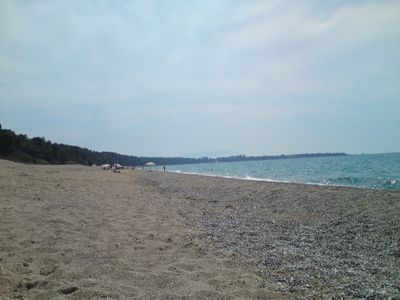
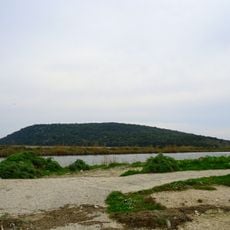
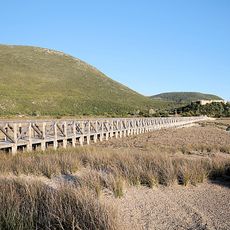
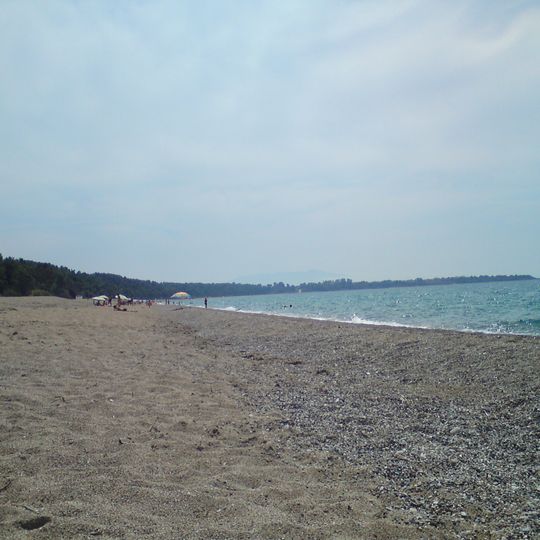
Monolithi is a broad sandy and gravel beach on the Ionian coast of the Preveza regional unit, running from Mytikas to Kastrosykia. Its pale sand gives way to grey pebbles near the waterline, and behind the shore lies the protected Monolithi forest, an archaeological zone where building is barred because of Ancient Nikopolis.
The beach takes its name from a single rock that stood about 10 metres from the shore and rose roughly 3 metres above the sea. Italian soldiers destroyed it with mortar fire in 1943, and it now lies as a reef just below the water surface. Before that, the area was known as Komaros, after the strawberry trees on the slopes above the bay.
The name comes from the Greek words for "single stone", after a rock that once stood about ten metres from the shore. Ancient maps called the bay Komaros, after the strawberry trees on the slopes east of the gulf, a name still heard as Gomaros. Villages along the beach are Mytikas, Kanali and Kastrosykia.
Monolithi runs about 22 km from Komaros cape at Mytikas past Kanali to Kastrosykia, with the Preveza–Igoumenitsa national road running behind the shore. The 8 km stretch behind Mytikas lies in the protected Monolithi forest, an archaeological zone where building is not allowed. The beach is widest in winter, roughly 50 to 10 m, and narrows toward the Koukos hills.
This beach ranks among the longest in Europe and stretches across a considerable distance along the shoreline. Its relative remoteness and limited beachfront development mean visitors can find quieter sections even during busy seasons.
The community of curious travelers
AroundUs brings together thousands of curated places, local tips, and hidden gems, enriched daily by 93,453 contributors worldwide.