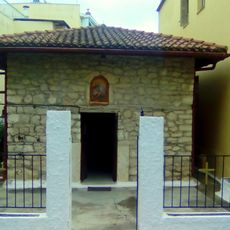
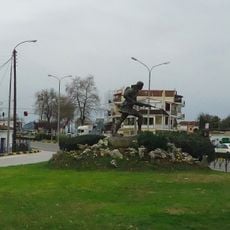
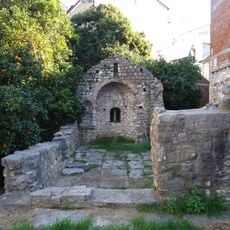
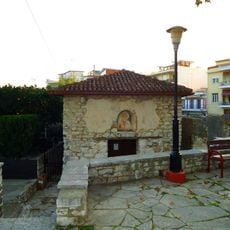
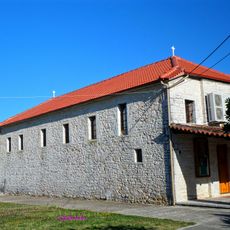
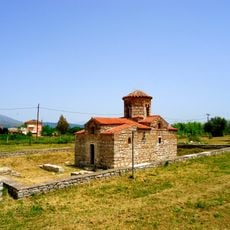
Rogoi, Byzantine fort in Nea Kerasounta, Greece.
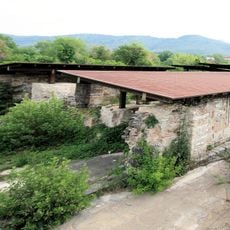
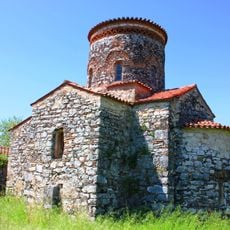
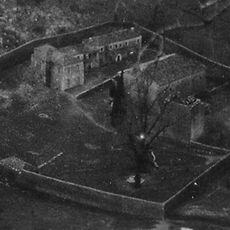
Rogoi is a Byzantine castle on a 29 m hill on the north bank of the Louros river, west of Nea Kerasounta. Its walls follow the foundations of the acropolis of ancient Bouchetion, and the river wraps around the base on the east, south and west. The medieval circuit reuses the first two phases of the ancient fortifications.
The hill was the acropolis of Bouchetion, an Elean colony founded in the 7th century BC and sacked in 167 BC during the Third Macedonian War; the town was abandoned after Nicopolis was founded in 28 BC. Rogoi is first attested in the Notitiae Episcopatuum as a bishopric under Leo VI (886–912), likely resettled in the 9th century. In 1338/9 the rebel Alexios Kabasilas seized the castle, and Andronikos III and John Kantakouzenos blockaded it until it surrendered. It passed to the Shpata family, then to Carlo I Tocco in 1416, and was abandoned after the Ottoman conquest in 1449.
The name Rogoi probably comes not from Slavic but from a Sicilian Greek word for granaries, suggesting Sicilian settlers were brought in. The see was a suffragan bishopric of Naupaktos under Leo VI, and in 2019 the title Bishop of Rogoi was revived for Filotheos Theodoropoulos, auxiliary bishop of Athens.
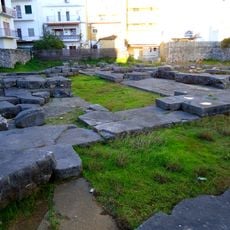
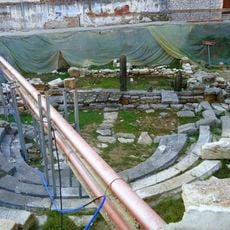
The castle stands on a 29 m hill west of Nea Kerasounta, on the north bank of the Louros, which wraps around its base on the east, south and west. The medieval walls follow the foundations of the ancient acropolis, so look for the earlier masonry courses at the base of the Byzantine circuit.
The medieval walls stand on the foundations of the ancient acropolis of Bouchetion, whose fortifications grew from a 450 m circuit enclosing 9,000 m2 to an outer line of 1,000 m around 37,000 m2. The Byzantine castle follows the course of those earlier walls and reuses their footings.
The community of curious travelers
AroundUs brings together thousands of curated places, local tips, and hidden gems, enriched daily by 93,172 contributors worldwide.