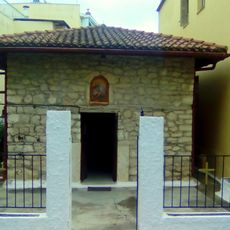
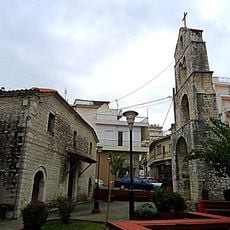
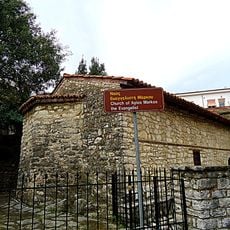
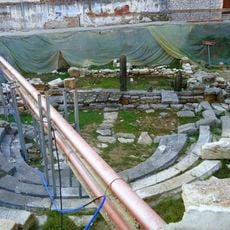
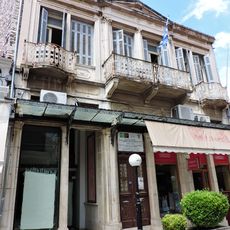
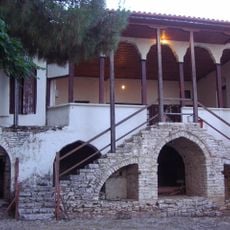
Church of St. Theodora, Byzantine church in Arta, Greece.
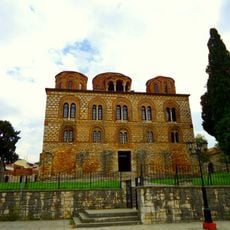
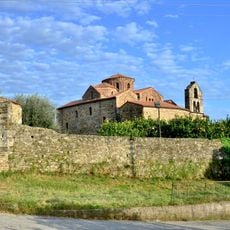
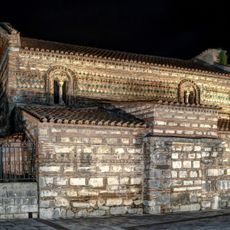
The Church of St. Theodora is a Byzantine religious structure featuring three aisles, an attached narthex, and two pediments constructed from stone and brick. The building displays the typical architectural features of medieval Eastern churches with its characteristic internal division and construction materials.
The structure was built around 1100 and underwent major transformations around 1270 when the royal family added a narthex and two pediments. These architectural changes reflected the religious and social shifts of the Despotate period.
The church is dedicated to Theodora Petraliphaina, queen and patron saint of Arta, who took monastic vows here after her husband's death and was buried on the site. Her relics are kept in two silver reliquaries, and a 17th-century silver-clad icon of the saint, painted on a thin layer of gold, is displayed. The name of the brick gate called Doxa, meaning glory, survives from the old church enclosure.
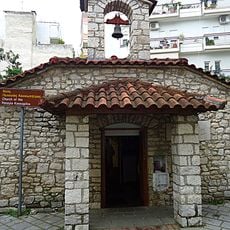
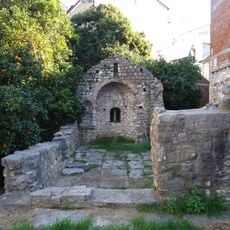
The church stands in the centre of Arta, near the bridge over the Arachthos. Visitors enter through the exonarthex; the tomb of St. Theodora is at the entrance, and the 13th-century well stands in the churchyard. The marble floor and the two surviving pieces of the marble iconostasis are inside.
The site houses the burial place of a 13th-century royal woman who transformed the original structure into a convent. This personal connection to the founder adds a layer of meaning beyond its role as an architectural landmark.
The community of curious travelers
AroundUs brings together thousands of curated places, local tips, and hidden gems, enriched daily by 94,388 contributors worldwide.