Castle of Arta, Medieval fortress in Arta, Greece.
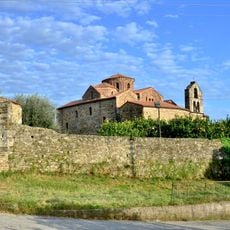
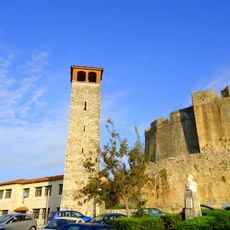
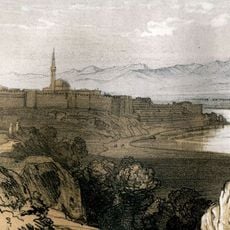
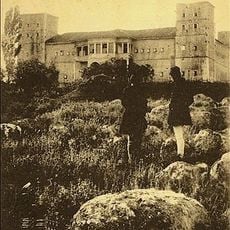
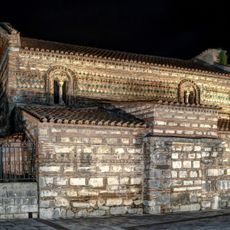
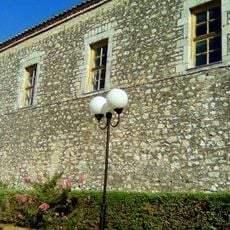
Castle of Arta is a fortified stronghold positioned on a low hill overlooking the Arachthos River valley. Its defensive walls form multiple rings that create separate internal spaces, connected by passages and protected positions.
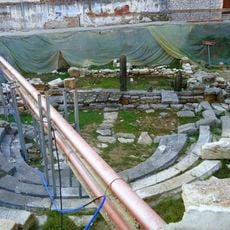
The castle was built in 1230 by Michael II Komnenos Doukas, ruler of the Despotate of Epirus, on the site of ancient Ambracia's lower town. Its walls incorporate ancient ashlars, and a monogram of Michael II was found in a tower near the main gate. Arta was besieged by Byzantines and Angevins; the Byzantines took it in 1338/39, and it later passed to the Serbs and Albanians before the Ottomans conquered it in 1449. Under Ottoman rule it served as a prison, where General Ioannis Makrygiannis was held.
The castle's name in Greek, Kastro tis Artas, is still used locally, while Ottoman Turks called it Narda Kalesi. A monogram attributed to Michael II Komnenos Doukas was found in a tower near the main gate. The walls were later adapted with embrasures for Ottoman and Venetian artillery.
The terrain is uneven, so wear sturdy footwear and move carefully while exploring the fortification. Pay attention to elevation changes and the height of walls as you navigate through different sections.
Preserved carved initials of ruler Michael II Komnenos appear within the castle walls as a rare direct mark. This personal touch offers visitors tangible proof of who built and controlled the fortress in its earliest days.
The community of curious travelers
AroundUs brings together thousands of curated places, local tips, and hidden gems, enriched daily by 92,929 contributors worldwide.