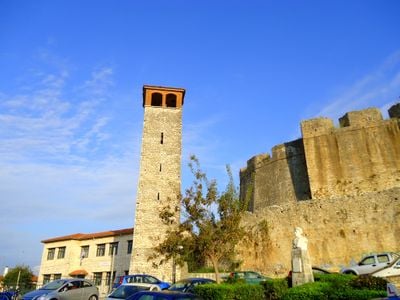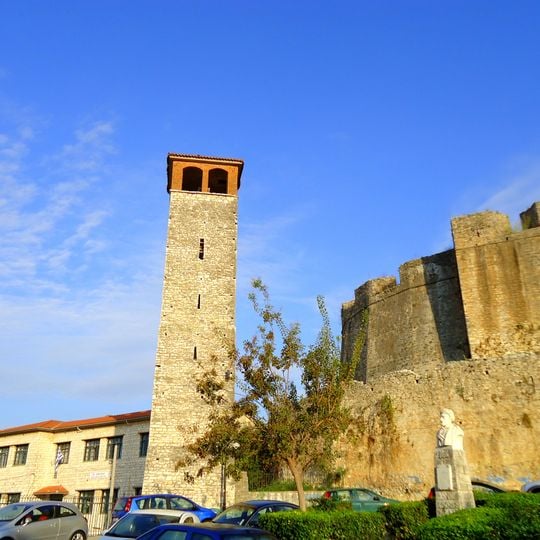
Clock Tower of Arta, Ottoman clock tower at Arta Castle, Greece.
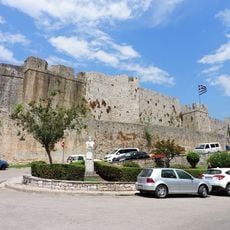
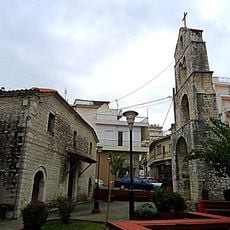
The Clock Tower of Arta is a 21-metre tower of cut stone similar to that of the castle, with a nearly square plan of base, shaft and roof. Its plain faces have three vertical openings on the east and south sides, widening inward to admit light. The clock dial, a circular iron disc with white glass and twelve metal rings for the hours, sits on the upper south face. The top is covered by a later tiled roof on small red-brick supports forming eight arched openings, two per side.
The tower dates from the first half of the 17th century, probably 1630–1650, and is the oldest clock in Epirus. Its first documented mention is in Evliya Çelebi's 1670 travelogue, which describes a 24-hour dial and a bell audible an hour's distance from Arta. The original mechanism was replaced by a pendulum clock in 1908 and by an electronic one in 1994.
The square in front of the tower, Plateia tis Oras, was one of Arta's busiest spots and a meeting place for the city's three religious communities. The tower's Ottoman builders set it beside the castle, and its bell marked the hours for the whole neighbourhood. Evliya Çelebi noted in 1670 that Arta had 17 districts: three Muslim, four Jewish and the rest Christian.
The interior is not open to the public, but you can view the exterior throughout the year whenever you visit the castle area. The tower sits at the entrance, making it easy to see on your way around the site.
Ottoman traveler Evliya Çelebi recorded that the bell's sound could be heard an hour's distance away, a remarkable technical feat for its era. Such detailed accounts reveal how well-known this tower was throughout the region during the 1600s.
The community of curious travelers
AroundUs brings together thousands of curated places, local tips, and hidden gems, enriched daily by 93,315 contributors worldwide.