James H. Clark Center, Research center at Stanford University, United States.
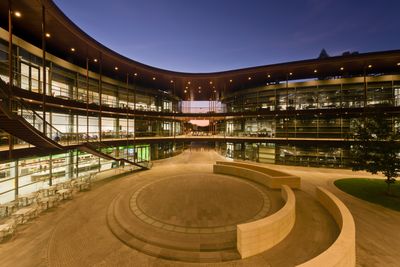
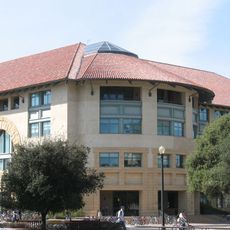
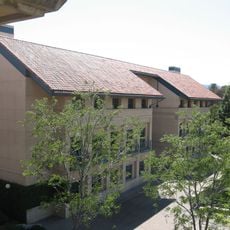
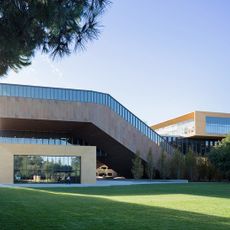
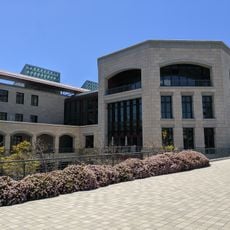
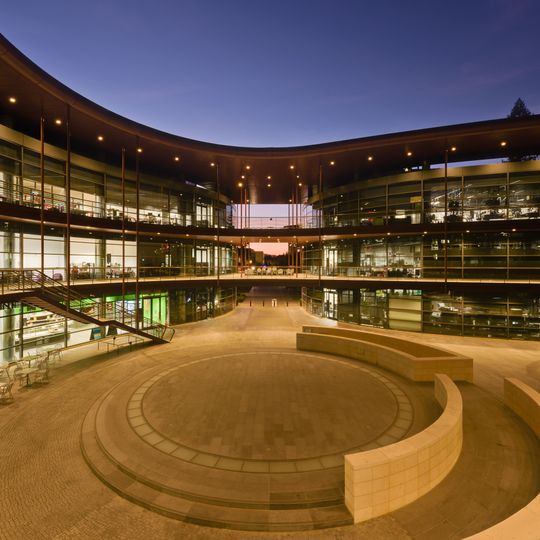
The James H. Clark Center is a research building at Stanford University with three stories and approximately 245,000 square feet of space. It features open laboratories with glass walls, connecting bridges between its three wings, and movable laboratory benches with flexible overhead service connections that allow teams to reconfigure spaces.
Construction started in 2001 with a major donation, and the building opened in 2003 as part of Stanford's Bio-X program. It was created to bring together biologists, engineers, and other researchers to work on interdisciplinary projects.
The building encourages researchers from different fields to meet and talk with each other through its design of exterior balconies instead of internal hallways. Scientists naturally encounter one another in these open outdoor spaces and share ideas informally.
The center sits on Stanford's campus and can be visited through organized tours that show how modern research spaces work. The open design makes it easy to see how scientists arrange their work areas, though active laboratory work may have restricted access.
The central courtyard has a circular stage for events with an auditorium below featuring 150 red seats. An adjustable skylight system allows natural light to be controlled to suit different gatherings and activities.
The community of curious travelers
AroundUs brings together thousands of curated places, local tips, and hidden gems, enriched daily by 90,777 contributors worldwide.