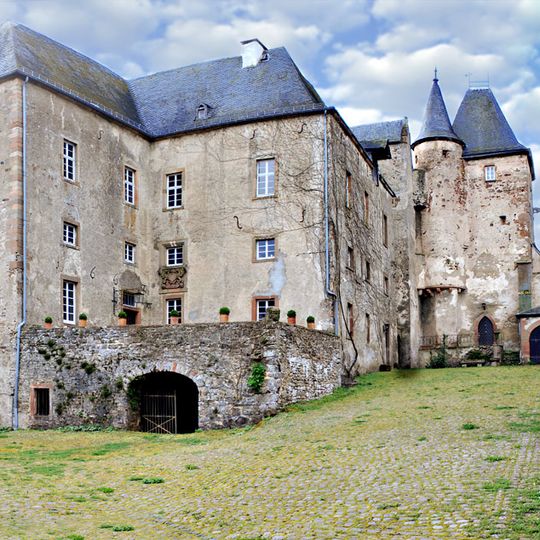
Lissingen Castle, Medieval castle in Gerolstein, Germany
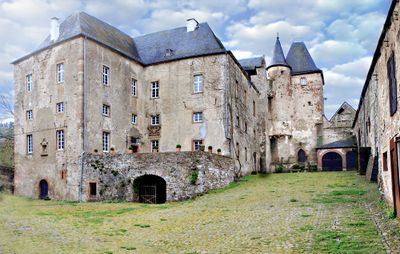
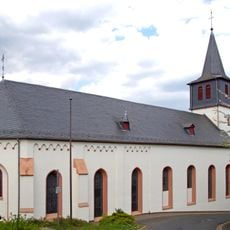
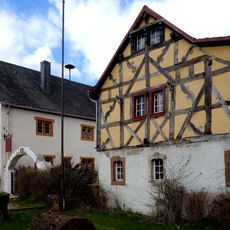
Lissingen Castle sits along the River Kyll and displays Gothic, Renaissance, and Baroque features across its stonework and towers. The complex comprises an upper and lower section with residential, farm, and mill buildings arranged around the river landscape.
The fortress was first recorded in written documents in 1212 and developed into a manor seat over subsequent centuries. An inheritance division in 1559 split it into upper and lower sections, each evolving independently thereafter.
The castle served as the economic hub of the region, where local farmers brought grain to be milled and stored. The mill and farm buildings reveal how closely the fortress and the surrounding community were connected.
The lower section functions as an event venue and houses a restaurant and bakery in the converted historical mill building. The riverside location makes it straightforward to visit, and walking through both sections offers a complete view of the complex.
The castle is part of a remarkable trio in the Eifel region: along with Bürresheim and Eltz castles, it avoided destruction from warfare or siege. This survival makes it a rare example of a structure inhabited continuously throughout the medieval and early modern periods.
The community of curious travelers
AroundUs brings together thousands of curated places, local tips, and hidden gems, enriched daily by 91,361 contributors worldwide.