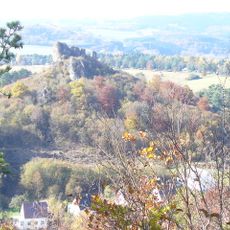
Buchenloch, Ice Age cave near Gerolstein, Germany
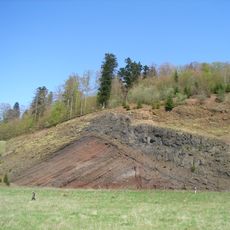
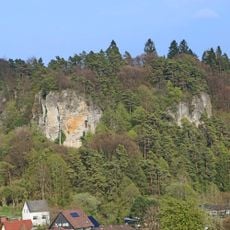
Buchenloch is a cave in the dolomite rock of the Gerolsteiner Kalkmulde north of Gerolstein. It is about 30 metres long, 4 metres wide and on average 2.4 metres high, with a thick central pillar, a large and a small side chamber, and a narrow side passage about 15 metres long on the left. Calcite and dolomite are dissolved by seepage water, producing calcareous sinter and dripstone formations.
The cave was dug in the 1880s by Eugen Bracht, a landscape painter. A stone tool found there belongs to the Moustérien, showing that Neanderthals stayed in the cave. Animal bones point to mammoth, cave bear, wild horse and reindeer as prey. The archaeological finds are in the Rheinisches Landesmuseum Trier; some bones are lost, others are in the Villa Sarabodis in Gerolstein.
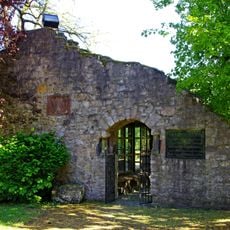
The cave's name pairs "Buchen" with "loch", and it is also known as Buchenlay. During the Second World War, because Gerolstein's railway line was a strategic target, part of the town's population used the cave as a shelter during bombing raids, alongside the forests of the Dietzenley.
The cave is publicly accessible and easy to reach via the Vulkanwanderweg (Eifel) and the ninth stage of the Eifelsteig. Do not enter between 1 October and 31 March, when legal bat protection prohibits visiting potential hibernation sites. Some areas are dark and damp, and a steep clay slope rises at the rear almost to the ceiling.
The cave's rear wall is formed by a steep, clay-covered slope that rises almost to the ceiling. Sickerwasser dissolves the minerals calcite and dolomite in the dolomite rock, depositing Kalksinter and Tropfstein inside the cave.
The community of curious travelers
AroundUs brings together thousands of curated places, local tips, and hidden gems, enriched daily by 93,614 contributors worldwide.