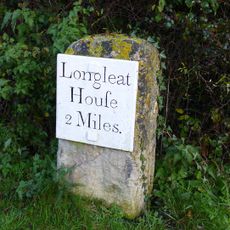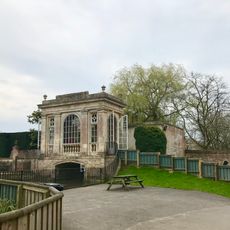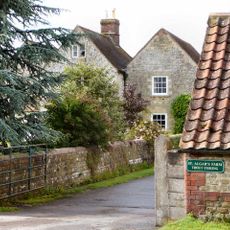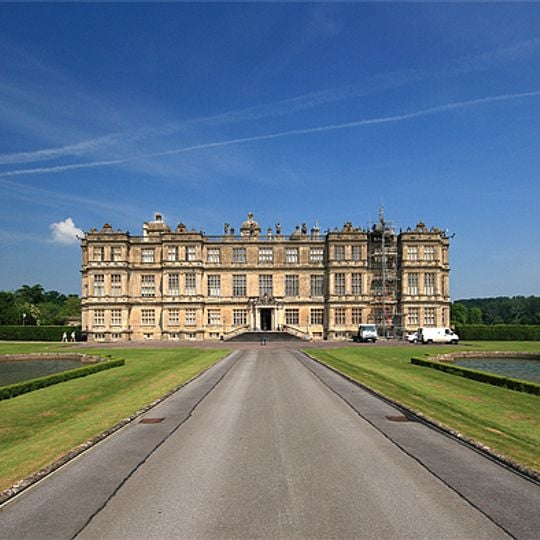
Longleat, English country house in Horningsham, England
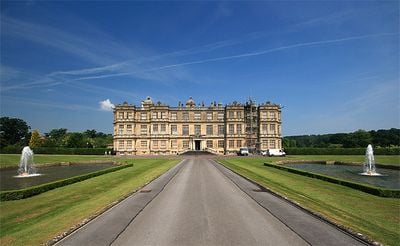
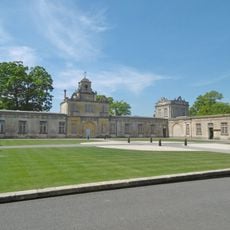
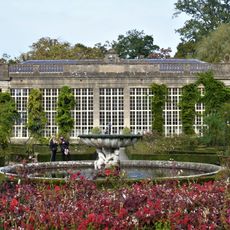
Longleat is a three-storey Elizabethan house of Bath stone, rectangular with two inner courtyards and projecting bay windows at the corners. Its pale tan facade has rows of mullioned and transomed windows between pilasters and string courses, and a balustrade with small urns and finials along the roofline. The 118-room house was built from 1568 to 1580 to designs by Robert Smythson.
Longleat was an Augustinian priory until Sir John Thynne bought it in 1541 for £53; the house burned in April 1567 and its replacement was largely finished by 1580, designed mainly by Thynne with Robert Smythson among the contributors. The Thynne family has held it unbroken since the 16th century, and in 1949 it became the first British country house opened to paying visitors.
The name comes from a "leat", an artificial waterway or channel such as that which supplies a watermill. The Thynne family has held Longleat since the 16th century and has borne the title Marquess of Bath since 1789; the 7th Marquess, Alexander Thynn, painted murals that remain in some rooms.
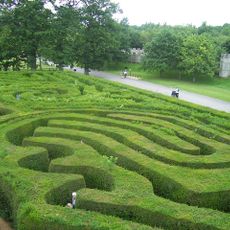
The tour of the house begins in the Elizabethan Great Hall, whose hammerbeam roof rises over ten metres, then continues through the lower east corridor, once the servants' route and now hung with furniture and paintings. The safari park and the hedge mazes lie in the park and are visited separately from the house.
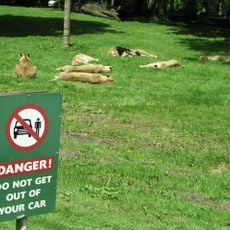
The residence was the first British manor house to welcome paying visitors and also established the first safari park outside Africa. Today lions and other animals still live in the park sections around the historical building.
The community of curious travelers
AroundUs brings together thousands of curated places, local tips, and hidden gems, enriched daily by 93,678 contributors worldwide.