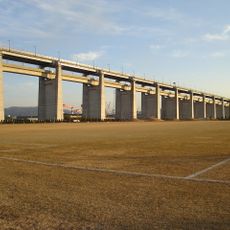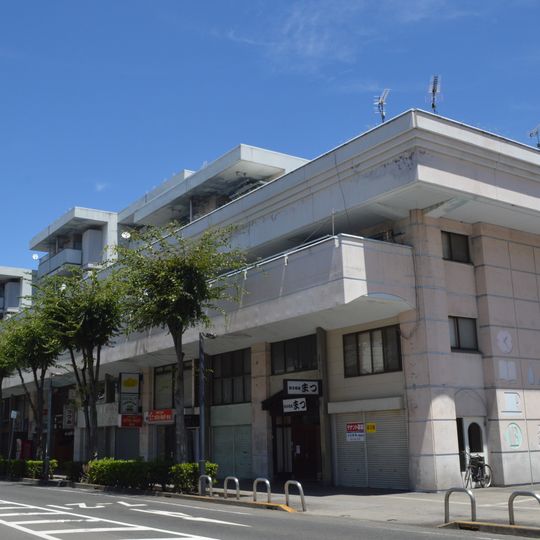
Sakaide Artificial Ground, Metabolist architectural complex in Sakaide, Japan
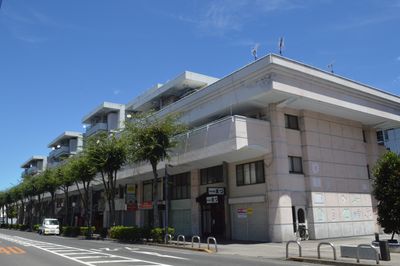
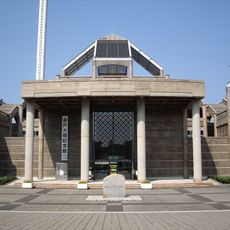
Sakaide Artificial Ground is a massive concrete platform elevated 5.3 meters above street level that supports residential buildings, shops, and public facilities in a single integrated structure. The complex unites multiple functions on one plane, creating a unified urban space where vehicles, pedestrians, and daily activities all flow across the same level.
The project emerged between 1968 and 1986 as a response to rapid urban growth in Japan, built on architect Masato Otaka's innovative concept of rethinking land use fundamentally. Its realization marked a turning point in Japanese urban planning by demonstrating how modern infrastructure could coexist with traditional property arrangements.
The structure represents a transformation in Japanese urban planning, integrating residential spaces with commercial areas through elevated concrete foundations.
The complex is best explored by using the various ramps and pathways that connect different areas across multiple levels. Start from street level to understand the elevation changes, then walk through the elevated pedestrian routes and public spaces to experience how the structure organizes daily movement.
The project pioneered a creative property solution by acquiring air rights from landowners rather than purchasing the land itself. This approach allowed owners to keep their stakes in the project while enabling the space above to be used for the new elevated structure.
The community of curious travelers
AroundUs brings together thousands of curated places, local tips, and hidden gems, enriched daily by 92,051 contributors worldwide.