Niobrara Formation, Geological formation in Great Plains region, United States.
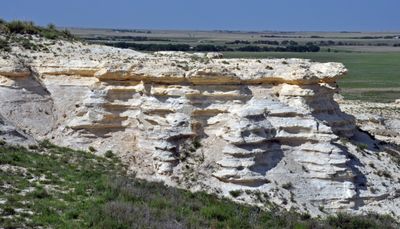
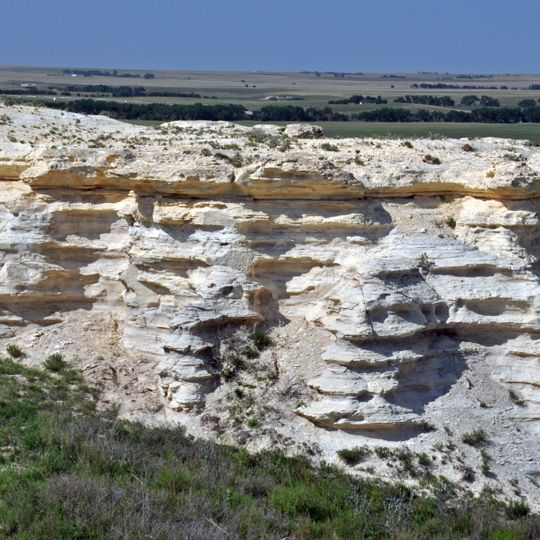
The Niobrara Formation is a chalk and limestone layer that spreads across multiple states in the Great Plains and consists of two main parts: the Smoky Hill Chalk Member and the Fort Hays Limestone Member. The two sections differ in composition and show different patterns from the ancient seawater that deposited them.
The formation was officially named in 1862 by scientists, following explorations that started in 1857 studying the rock layers across the region. These early investigations laid the groundwork for understanding the Cretaceous period in North America.
Native people gathered Smoky Hill Jasper from the formation to make tools and objects that archaeologists still find at dig sites today. This stone was an important material for everyday use across many generations.
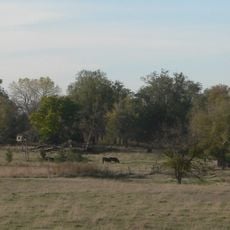
The formation spreads across hundreds of miles and is visible at many locations where erosion has exposed the layers and made fossils accessible to see. It is best explored in areas where natural exposures or museums display excavated pieces.
The chalk layers hold the remains of giant sea creatures like mosasaurs and plesiosaurs that lived in a shallow sea millions of years ago. These fossil finds show that the region was once completely covered by water, long before the landscapes we see today formed.
The community of curious travelers
AroundUs brings together thousands of curated places, local tips, and hidden gems, enriched daily by 91,873 contributors worldwide.