St. Anthony's Rock, Limestone sea stack in St. Ignace, Michigan, United States
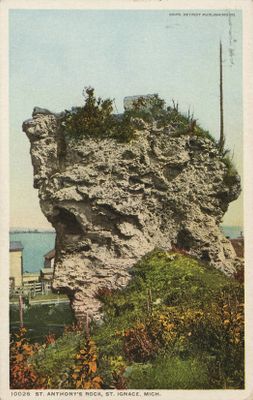
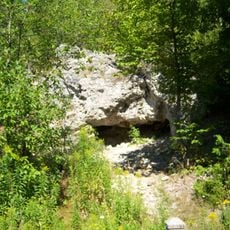
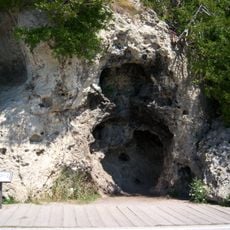
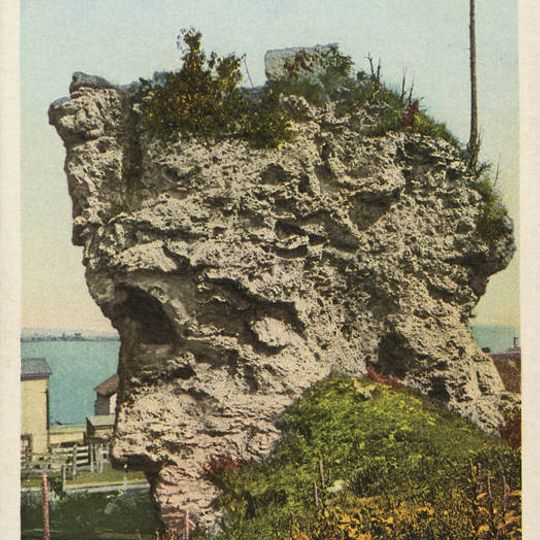
St. Anthony's Rock is a natural limestone breccia formation located in downtown St. Ignace that was created roughly 350 million years ago when cave roofs collapsed. The rock consists of different stone types bonded together by calcium carbonate from groundwater, forming the distinctive structure visible today.
Father Louis Hennepin, a Jesuit serving as chaplain to explorer La Salle, named the rock formation in 1679 during their maritime journeys. The stone survived both the Wisconsinan Glaciation and subsequent erosion from Lake Algonquin's waters in later geological periods.
Native American communities gathered at this rock formation to hold performances and observe the surrounding landscape before European settlement arrived in the region. The site remains a place where you can sense that connection to early inhabitants and understand how natural features shaped their daily activities.
The rock sits just one block from State Street, where shops and businesses are nearby for easy access. An informational plaque at the site explains the geological makeup and helps you understand why this natural formation matters to the area.
The rock withstood multiple ice ages and lake erosion, making it a rare survivor of these powerful geological forces. Few visitors realize that the mix of different stone types cemented together tells a long story of cave formation and collapse over deep time.
The community of curious travelers
AroundUs brings together thousands of curated places, local tips, and hidden gems, enriched daily by 60,000 contributors worldwide.