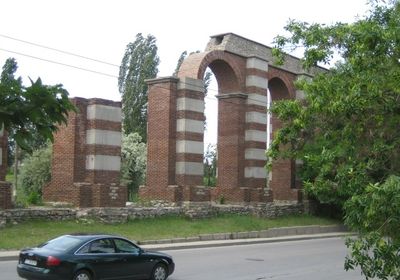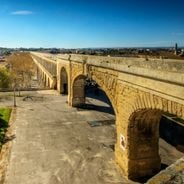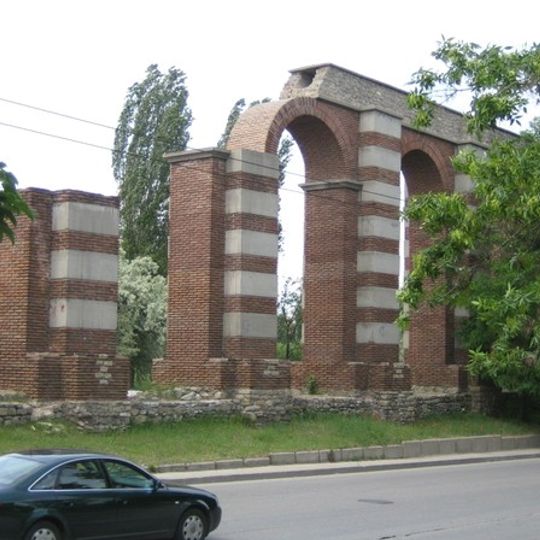
Aqueducts of Plovdiv, Roman aqueduct ruins in Plovdiv, Bulgaria.
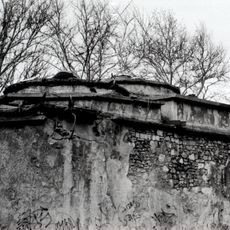
The Aqueducts of Plovdiv are remains of a Roman water delivery system built with red brick and white stone that stretches across several kilometers of the city. The preserved sections reveal arches and walls of varying heights, some running beneath modern streets and visible in different neighborhoods throughout Plovdiv.
Roman engineers constructed this water system in the 2nd and 3rd centuries AD to bring water from mountain springs to the ancient city of Philippopolis. The structure remained in use for centuries and shaped how the city developed, becoming one of the most important remnants of Plovdiv's Roman past.
The aqueduct remains are woven into the city's identity and serve as a reminder of the Roman presence that shaped this region for centuries. Walking through modern Plovdiv, you encounter these structures as part of everyday urban life rather than isolated monuments.
The main section of the aqueduct is located at Komatevsko Shosse Street with public transportation stops nearby for easy access. Since the structures are scattered across different parts of the city, wearing comfortable walking shoes is useful for exploring the various sections.
The system included two parallel channels running side by side, each taking a separate route to supply different parts of the city. This dual network was designed as a safety measure so that if one line needed maintenance or repair, the other could continue delivering water without interruption.
The community of curious travelers
AroundUs brings together thousands of curated places, local tips, and hidden gems, enriched daily by 91,541 contributors worldwide.