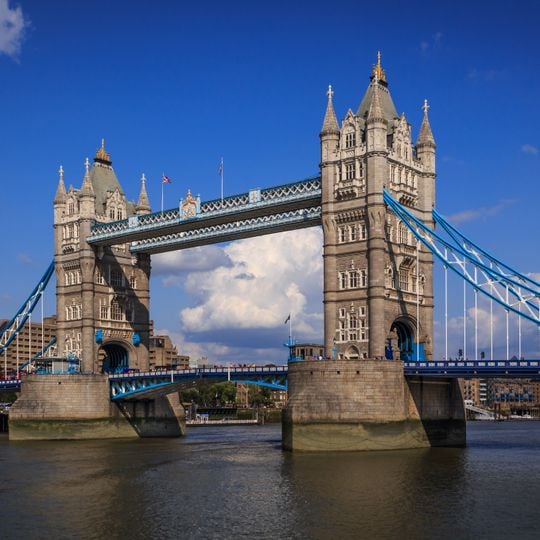
Tower Bridge, Bascule and suspension bridge in London, United Kingdom
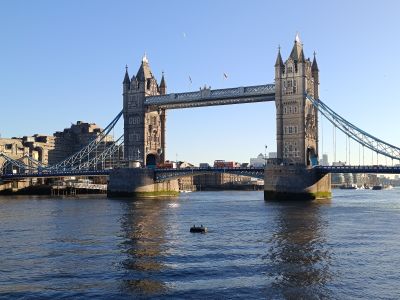
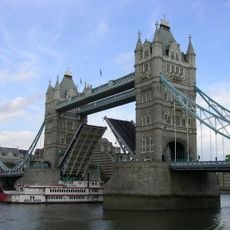
Tower Bridge is a combined bascule and suspension bridge across the Thames, built between 1886 and 1894 to designs by Horace Jones and John Wolfe Barry. Two 65-metre stone towers with pointed roofs and gold finials stand on massive piers; two horizontal walkways link them at the upper level, and a central pair of bascules opens for shipping.
The bridge opened in 1894, built to handle increasing traffic east of the existing London Bridge crossing. Its construction represented an engineering achievement that connected previously separated areas of the city.
The bridge's name comes from its proximity to the Tower of London, and its Gothic Revival design was required by the 1885 act of Parliament to match that fortress. The high-level walkways, now part of the exhibition, were originally open to pedestrians but gained notoriety as a haunt for pickpockets and prostitutes before closing in 1910.
The bridge can be crossed on foot at street level or visitors can access the higher walkways and exhibition spaces by entering through the towers on either side. Peak times mean longer queues, so visiting earlier or later in the day often makes for a smoother experience.
The bridge's bascule leaves were originally driven by steam-powered hydraulic machinery; in 1972 the system was converted to electro-hydraulic operation. The Victorian engine rooms, which housed the original pumps and accumulators, can be visited as part of the Tower Bridge Exhibition. The high-level walkways, now a visitor attraction, were designed to let pedestrians cross even when the bascules were raised.
The community of curious travelers
AroundUs brings together thousands of curated places, local tips, and hidden gems, enriched daily by 93,286 contributors worldwide.