Roman Ruin, Artificial ruin in Schönbrunn Palace Park, Vienna, Austria
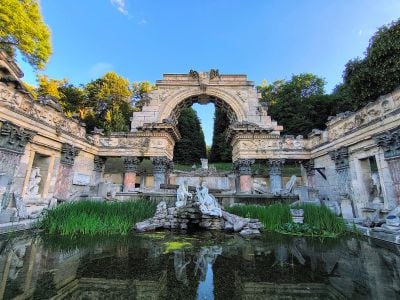
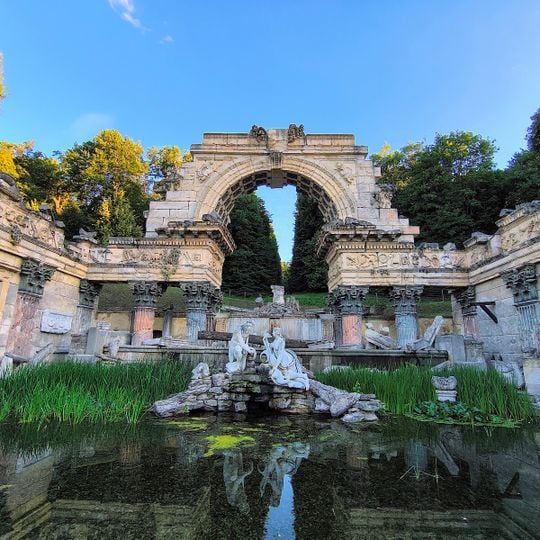
Roman Ruin is an artificial garden feature placed on the slope of Schönbrunn Hill, made to look like a crumbling ancient structure. Its central round arch rises above a rectangular stone basin, and rough side walls with sculpted figures give the whole site the appearance of a partly buried temple.
It was built in 1778 under the direction of court architect Johann Ferdinand Hetzendorf von Hohenberg. The design borrowed from printed views of ancient Roman temples, and sculptors including Beyer, Henrici, and Zächerle added reliefs and figures that tied the garden to the imperial fashion for staged antiquity.
For local walkers, the ruin acts as a visual pause in the garden: people stop to look through the arch, trace the carved reliefs, and take photos of the stonework against the trees. The figure of Hercules with Cerberus at the top of the slope often draws attention because it turns a garden decoration into a small stage for myth.
The ground around the ruin has a gentle slope, so wear shoes that handle gravel and grass. A walk here fits easily into a longer visit to the park, and the open-air setting means it is best seen in daylight without needing special equipment.
Originally the site was called the Ruin of Carthage, even though it has no connection to that city. The sculpture in the pool below represents the river gods Danube and Enns rather than figures from the ancient Mediterranean, quietly mixing local geography with Roman fantasy.
The community of curious travelers
AroundUs brings together thousands of curated places, local tips, and hidden gems, enriched daily by 91,297 contributors worldwide.