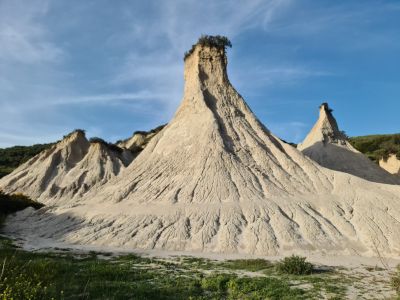
Komolithi, Palaeontological site in Potamída, Kissamos, Greece.
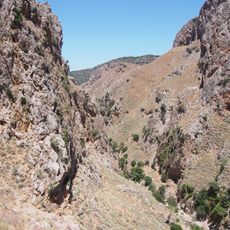
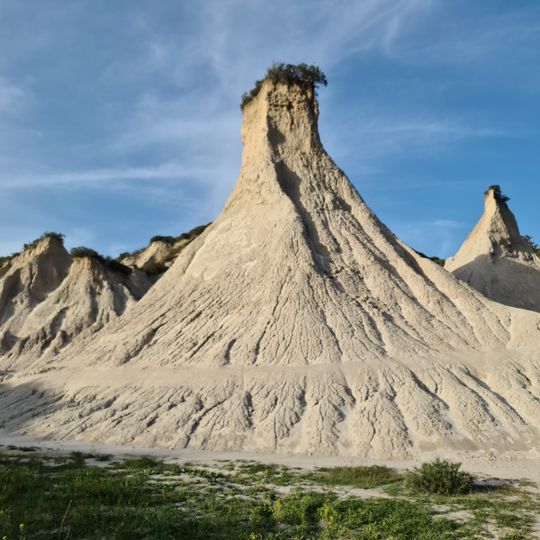
Komolithi features cone-shaped geological formations created by natural erosion of soft clay soils over thousands of years, revealing a landscape resembling sand dunes in a Mediterranean environment with pyramid-shaped slopes and contrasting vegetation patterns.
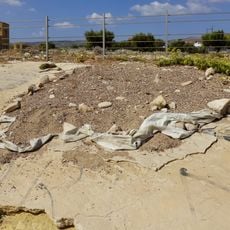
The formations developed on land once submerged beneath the sea, as evidenced by marine fossils embedded within the geological composition of the hills, indicating their ancient origins in a marine environment millions of years ago.
The site provides educational opportunities for geologists, students, and nature enthusiasts, serving as a natural laboratory for studying erosion and sediment transport dynamics while highlighting Crete's diverse geological heritage.
The site is accessible by car via local roads connecting to nearby villages of Potamída and Káto Palaiókastro, requiring self-guided exploration with appropriate footwear and adherence to preservation guidelines to protect fragile formations.
Geologists have noted the presence of mineral deposits including traces of pyrite and gold within the formations, suggesting the area's complex geological history during different geological periods and its connection to ancient marine environments.
The community of curious travelers
AroundUs brings together thousands of curated places, local tips, and hidden gems, enriched daily by 92,761 contributors worldwide.