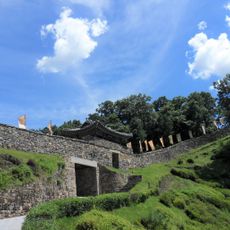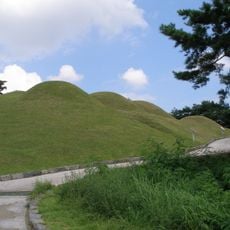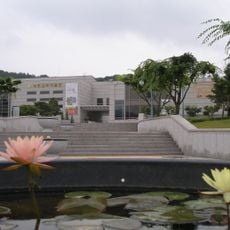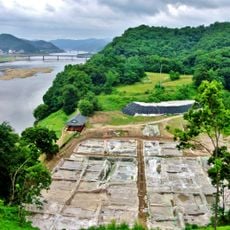
King Muryeong Tomb, Royal tomb from the Baekje period in Gongju, South Korea
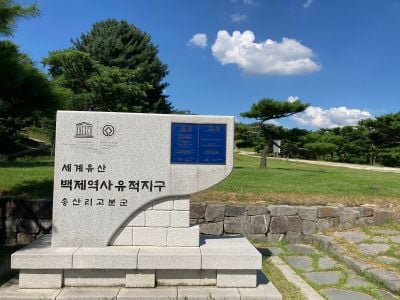
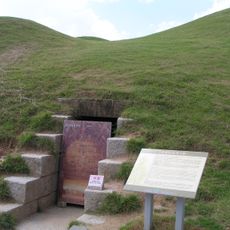
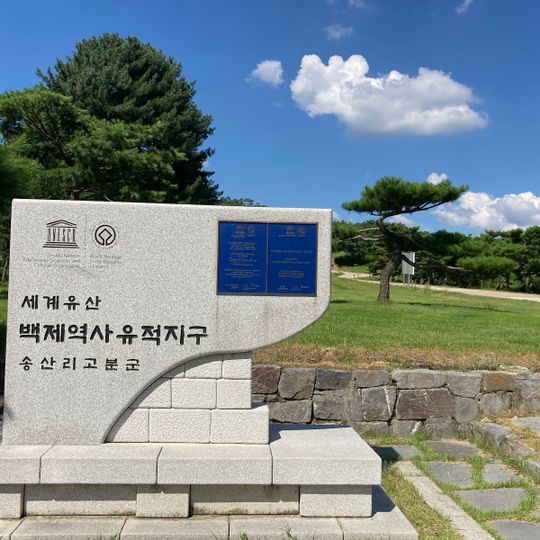
King Muryeong Tomb is a royal burial site from the Baekje period in Gongju, South Korea, part of a cluster of seven tombs on the southern slope of Songsan Mountain. The chambers are built with bricks and stone, some decorated with murals, and each accessed through a narrow tunnel entrance.
The Songsan-ri tombs were built during the period when Gongju served as the capital of Baekje, roughly between the 5th and 6th centuries. King Muryeong's tomb was found by accident in 1971 during drainage work, and it was the only one in the group that had never been looted.
The tomb is one of the few royal burial sites from the Baekje period where the identity of those buried is clearly confirmed. A stone marker found inside explicitly names the king, which is rare for tombs of that era.
The site is part of a UNESCO World Heritage designation and has a nearby museum displaying replica artifacts and information about Baekje history. A morning visit is a good idea if you want to walk around before tour groups arrive.
Although the excavation yielded over 4,600 objects, the tomb was cleared in just 17 hours before any conservation measures could be put in place. The bricks inside carry patterns borrowed from the Chinese Han tradition, showing how closely Baekje was connected to continental Asia.
The community of curious travelers
AroundUs brings together thousands of curated places, local tips, and hidden gems, enriched daily by 91,375 contributors worldwide.