Tomb of King Muryeong, Royal tomb in Gongju, South Korea
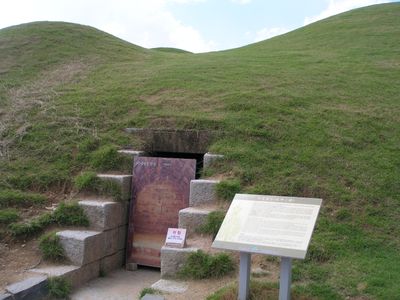
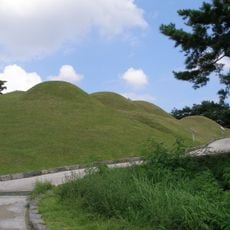
The Tomb of King Muryeong is a royal burial site in Gongju constructed from brick with two distinct chambers inside. The inner chamber holds the remains of both the king and his queen from the Baekje period, showing the architectural methods used for royal burials of that time.
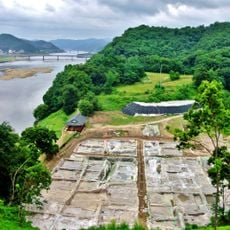
King Muryeong died in 523 and was buried in 525 after a two-year-three-month temporary interment; his queen, who died in 526, was placed in the same brick chamber in 529. The tomb was found by chance on 5 July 1971 during drainage work at Songsan-ri, its entrance still sealed with brick and lime. Two inscribed stone plaques identified the occupants, making this the only Three Kingdoms royal tomb with a confirmed owner.
The name Muryeong is the posthumous title of Baekje's 25th king, called Samawa on the memorial stones; the epitaph styles him "General of the East, Baekje Samawa" and calls the grave a "great tomb", wording borrowed from Chinese imperial usage. The queen's stone records that 10,000 coins were paid to the earth deities for the plot, and a bundle of Chinese Wuzhu coins lay on it.
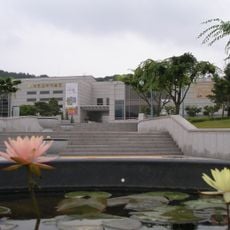
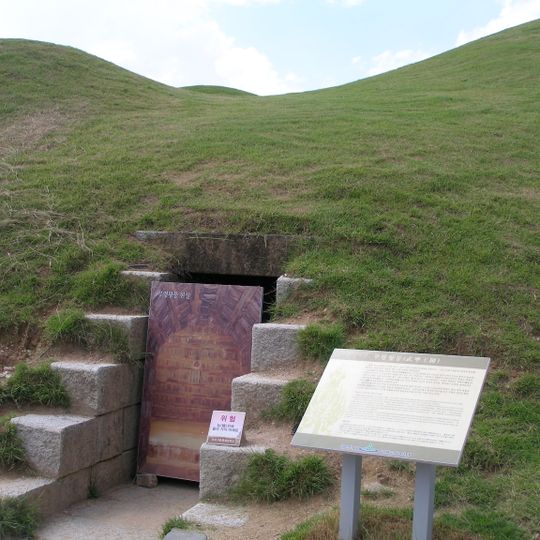
The brick chamber sits under a grass mound reached by a short six-block stair; the entrance is low, so watch your head. Two signs at the base show the arched brick interior and the name "위례". Excavated finds, including the gold crown ornaments and the stone slab epitaph, are held at the National Gongju Museum nearby.
The bricks carry stamped inscriptions: one reads "士壬辰年作", dating production to 512, and a lotus brick from neighbouring Tomb No. 6 bears "梁官瓦爲師矣", meaning the Liang official tiles served as models. The chamber also faces south, contrary to the usual Chinese placement of tombs to the north.
The community of curious travelers
AroundUs brings together thousands of curated places, local tips, and hidden gems, enriched daily by 93,553 contributors worldwide.