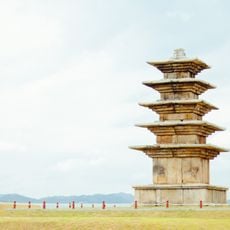
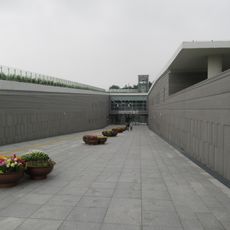
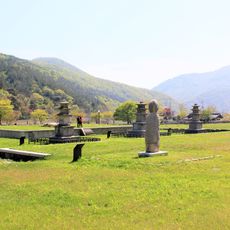
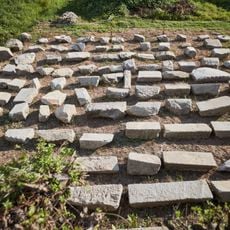
Buyeo Naseong, Ancient city walls in Buyeo, South Korea.
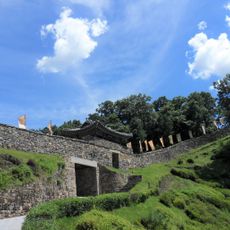
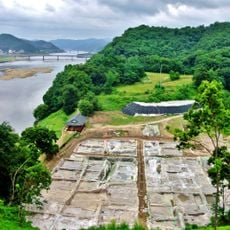
Buyeo Naseong is the outer earthen wall of Sabi, the Baekje capital from 538. It runs north–south about 3 km east of Buyeo's centre, ending near the Geumgang, and the UNESCO-listed section is 6.3 km long; sources also cite an 8 km circuit. Its outer face is steep and its inner face gentle, with a path wide enough for riders and guard posts along the top.
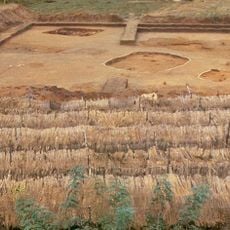
King Seong moved the Baekje capital from Ungjin to Sabi in 538, and the Naseong wall was built before that year to protect the new seat. Its northern section lost its defensive role after Baekje fell in 660. Excavations between 1991 and 2013 uncovered wall segments, gate foundations, command posts and building remains.
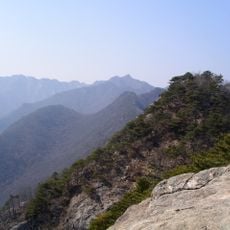
The name Naseong means "outer wall", distinguishing it from the inner Busosanseong on the hill. The wall's outer face was built steep and the inner face gentle, leaving a path wide enough to ride a horse along the top, with guard posts at intervals. On Pilsubong, the highest peak, traces of a beacon platform and a building site remain.
You can explore the site on foot, as marked paths lead through the preserved sections. Information signs along the way explain the ancient defense systems and help you understand the layout.
The wall used a special light construction technique with compacted earth that allowed fast building without loss of quality. This method was unusual for that time and shows engineering skill.
The community of curious travelers
AroundUs brings together thousands of curated places, local tips, and hidden gems, enriched daily by 93,462 contributors worldwide.