Wanggung-ri, Archaeological site and park in Iksan-si, South Korea.
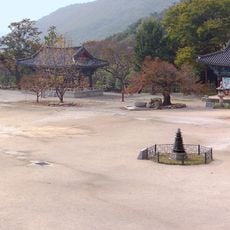
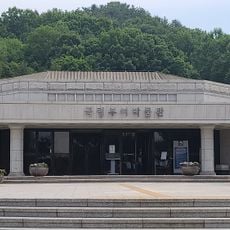
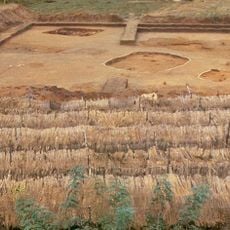
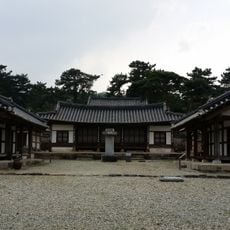
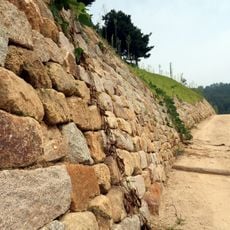
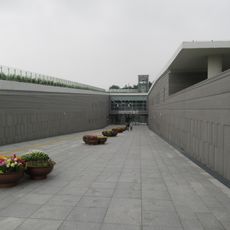
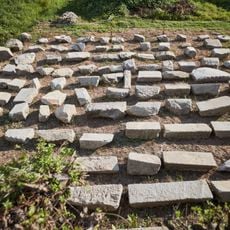
Wanggung-ri is an archaeological site in Iksan that preserves the remains of a royal palace with visible stone structures and building foundations that visitors can see today. The on-site museum displays thousands of artifacts recovered through decades of excavation work.
King Mu of Baekje (reigned 600–641) chose Iksan as a second capital and had his second royal palace built on this site. Excavations since 1989 show the area was occupied across at least three periods, from the late Baekje era to the late Unified Silla. How long the palace lasted and when it was destroyed is still unknown.
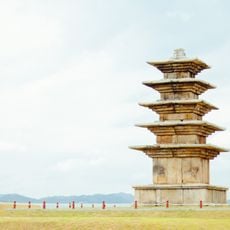
The site is also called Wanggung-ri Seong, and local tradition links it to several lost capitals: Mahan's seat, King Mu of Baekje's move of the court to Iksan, Anseung's state and Gyeonhwon's Later Baekje. Excavations since 1989 have revealed a rectangular flatland fortress around the pagoda, with a walkway of flat stones about 1 m wide inside and outside the walls.
The museum on-site helps visitors understand what they are seeing on the grounds and provides information to make sense of the excavated structures. Walking through the site is straightforward, with good markers to find your way between different sections.
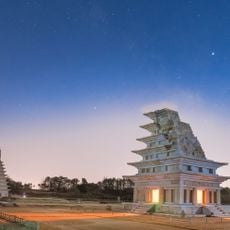
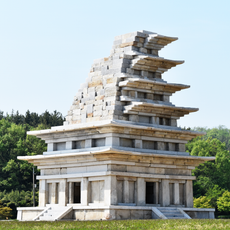
The five-story stone pagoda at Wanggung-ri, National Treasure No. 289, stands east of the palace site. Excavations about 30 meters east of the pagoda uncovered two kilns from the Unified Silla period, showing tile production nearby. The pagoda and surrounding temple layout support the theory that King Mu of Baekje established a second capital at Iksan.
The community of curious travelers
AroundUs brings together thousands of curated places, local tips, and hidden gems, enriched daily by 94,552 contributors worldwide.