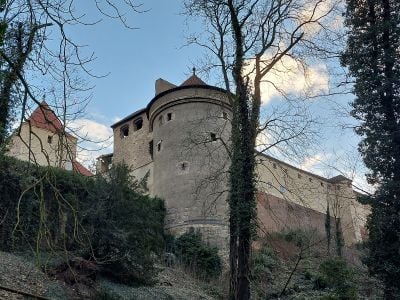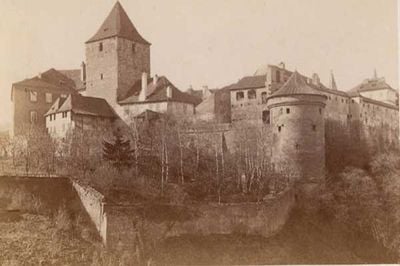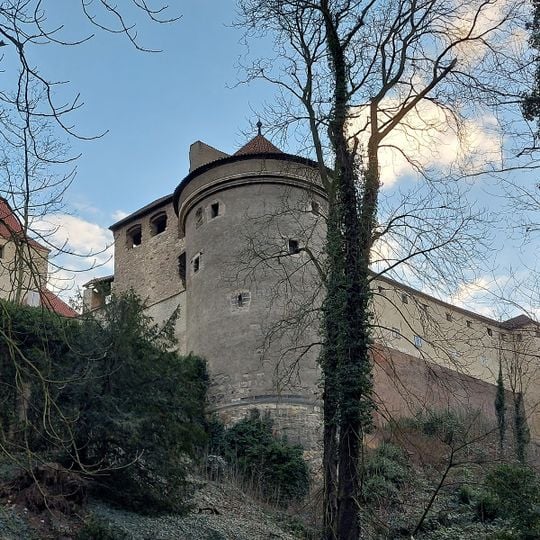
Daliborka, Fortified tower in Prague Castle, Czech Republic
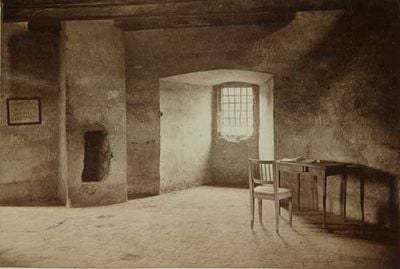
Daliborka is a round tower within Prague Castle featuring five levels with thick stone walls that contain multiple prison spaces. The structure includes four cells on the upper floors and a deep dungeon accessed through a circular opening in the floor.
Construction began in 1496 under architect Benedikt Ried and the structure served as a prison for over two centuries. It became known for holding nobles and political opponents until its function as a detention facility ended in 1781.
The tower is named after knight Dalibor of Kozojedy, its first prisoner, jailed for defending rebellious peasants against their lord. Legend says he learned to play the violin out of boredom, and that mournful fiddle notes were heard from the tower after his death; this tale inspired Bedřich Smetana's opera Dalibor.
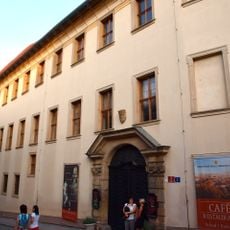
Daliborka stands at the eastern end of the Golden Lane, at the close of the corridor of small houses, so it is reached on foot through that lane inside Prague Castle. The interior is entered by a narrow staircase and the lower level, the jug sunk six metres below the floor, is not accessible. The tower has been open to the public since 1883.
The dungeon's lowest level, called the "jug", was dug six metres below the floor and reached only by lowering prisoners through an opening. Archaeologists found remains of a human skeleton in the channel draining into the Stag Moat: the prisoner died on the narrow passage before reaching the exit, short of the last thirty centimetres of earth.
The community of curious travelers
AroundUs brings together thousands of curated places, local tips, and hidden gems, enriched daily by 92,148 contributors worldwide.