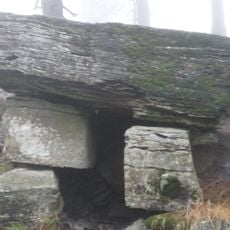
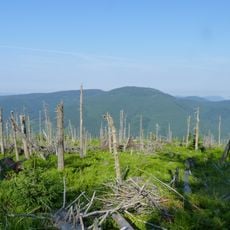
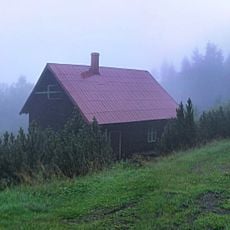
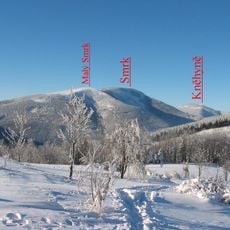
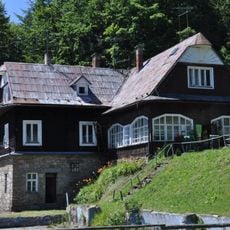
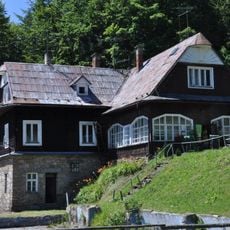
Kněhyňská jeskyně, Natural monument and protected cave in Čeladná, Czech Republic.
Kněhyňská jeskyně is a cave system in the Godula sandstone rock formation measuring 280 meters in length and reaching about 57.5 meters deep. It features a network of branching fissures and chambers created by natural erosion processes over time.
Kněhyňská jeskyně is a natural monument near Čeladná in the Frýdek-Místek district, cared for by the Beskydy Protected Landscape Area administration (AOPK ČR). Protection covers the pseudokarst cave system and its ecological functions, as a geomorphological feature documenting the development of sandstone flysch formations and as a zoological site with bat colonies.
The cave is a wintering site for a large colony of the greater mouse-eared bat (Myotis myotis). Seven other bat species appear here irregularly, among them the lesser horseshoe bat (Rhinolophus hipposideros) and the Geoffroy's bat (Myotis emarginatus). The protected area is managed by the Beskydy Protected Landscape Area administration.
The cave lies in the Beskydy Protected Landscape Area near Čeladná, in the Frýdek-Místek district, and is cared for by the AOPK ČR administration of the Beskydy PLA. It is a pseudokarst system in sandstone flysch, not a show cave: there are no tours, and the bat hibernation colony means visits are best avoided in winter.
The cave system developed through gravitational processes in the Godula sandstone, creating what geologists call pseudokarst passages. This type of formation differs from typical limestone caves and reveals unusual geological conditions specific to this rock type.
The community of curious travelers
AroundUs brings together thousands of curated places, local tips, and hidden gems, enriched daily by 92,985 contributors worldwide.