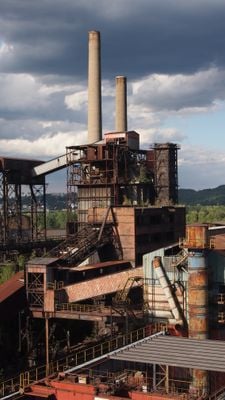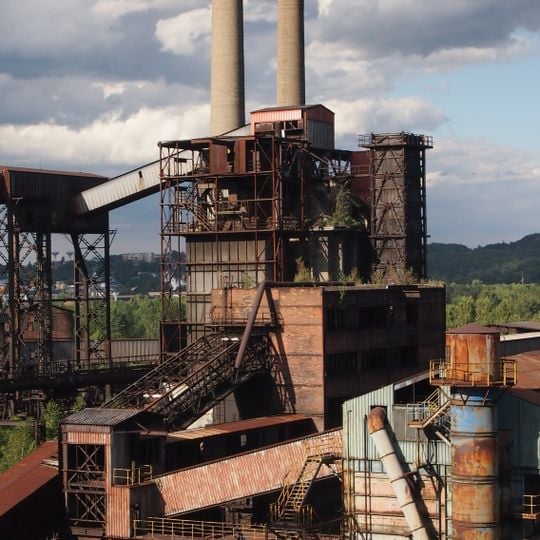
Lower Vítkovice, Ironworks complex in Moravská Ostrava, Czech Republic
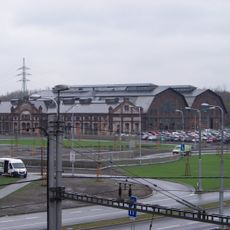
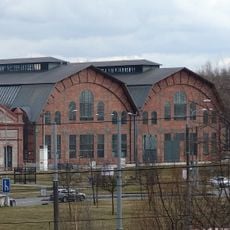
Lower Vítkovice is a large industrial complex spanning approximately 150 hectares near Ostrava with preserved mining and ironmaking structures. The site includes former coal mines, blast furnaces, and a coking plant with chemical operations, now partially converted into museums and cultural spaces.
The Vítkovice ironworks was founded on 9 December 1828 at the initiative of Olomouc Archbishop Rudolf, and Rudolf's smelter began operating in mid-September 1830. A coke plant followed in 1831, the first coke-fired blast furnace was lit in 1836, and the Hlubina mine was sunk nearby in 1852. The last tapping took place on 27 September 1998; in June 2002 the area was declared a national cultural monument.
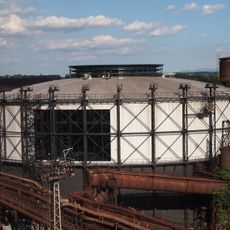
The gas holder, built in 1922–1924 to hold 50,000 m³ of blast-furnace gas, was raised by 14.92 m in January 2011 and fitted with an interior hall for 1,500 visitors. It opened on 1 May 2012 as the Gong auditorium. The name "Ostravské Hradčany" comes from a popular tale about a postage stamp.
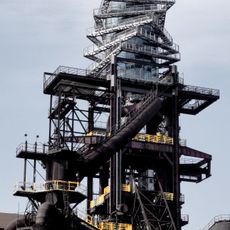
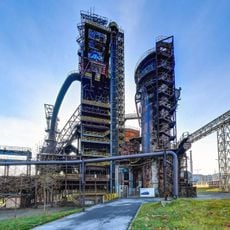
The tour of blast furnace No. 1 starts at the crane track and continues in a four-ton skip lift holding twelve to sixteen people, up to a platform at 45 m and a lookout tower at 60 m. Bolt Tower, a 77.7 m superstructure with a café, stands on the furnace top. The Gong hall seats 1,500 visitors.
The nickname "Ostrava Hradčany" comes from a popular legend about a stamp pairing Prague Castle with a Vítkovice panorama, though the first stamp showing Moravian Ostrava appeared only in 1939 under the Protectorate. The gas holder's bell was lifted 1,492 cm in January 2011 to make room for the Gong hall.
The community of curious travelers
AroundUs brings together thousands of curated places, local tips, and hidden gems, enriched daily by 92,227 contributors worldwide.