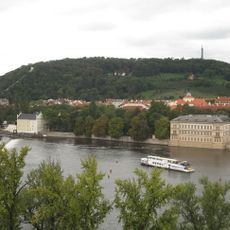
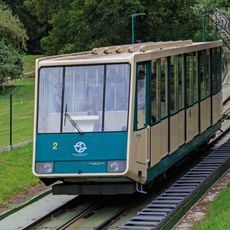
Mariánské hradby, Baroque fortification in Hradčany, Prague, Czech Republic
Mariánské hradby is a fortification system that runs through Prague 1 and Prague 6 districts, featuring defensive structures characteristic of the Baroque period. The walls are built from stone and incorporate varied architectural details that together form a coherent defensive system defining the city's historical outline.
After the Swedish siege of 1648 exposed the weakness of Charles IV's medieval walls, General Raimund Montecuccoli proposed a bastion fortress in 1650 for Ferdinand III. Italian engineers such as Inocentio Conti drew the plans, and construction ran from 1653 to about 1730, costing roughly two million gulden. The walls withstood Frederick of Prussia's siege in 1757, but demolition began in 1874 under Franz Joseph I.
The name comes from a chapel dedicated to the Virgin Mary, built in 1735 by Kilián Ignác Dientzenhofer between bastions X and XI. The surviving bastions carry saints' names, such as St Charles, St Lawrence and St Adalbert, and the walls are listed as monument 44513/1-482.
The surviving bastions stand in Prague 1 and Prague 6, from bastion IV of St Charles to bastion XIX of St Mary Magdalene near Kramář's villa. The Písecká brána (Sand Gate) is the main preserved gate; a stretch of the original 1831 path under its arch along Chotkova street is still visible.
The walls are named after a small Chapel of the Virgin Mary built in 1735 between bastions X and XI by Kilián Ignác Dientzenhofer. The northern stretch differs from the rest: a low armoured escarpment carries a fausse-braye, with the main rampart rising up to 13.5 m above the dry moat.
The community of curious travelers
AroundUs brings together thousands of curated places, local tips, and hidden gems, enriched daily by 94,299 contributors worldwide.