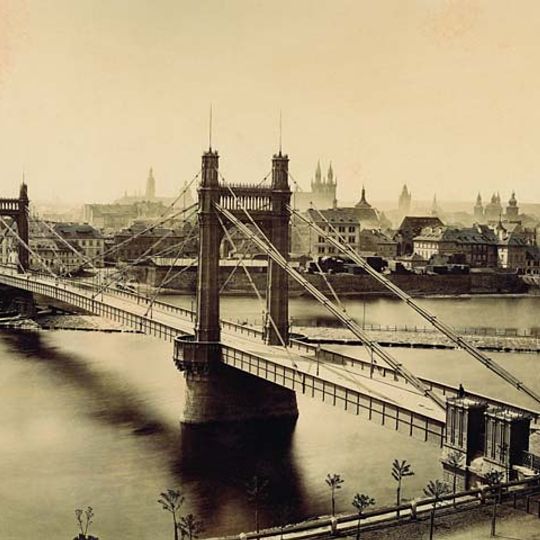
Franz Joseph Bridge, Suspension bridge over Vltava River in Prague, Czech Republic
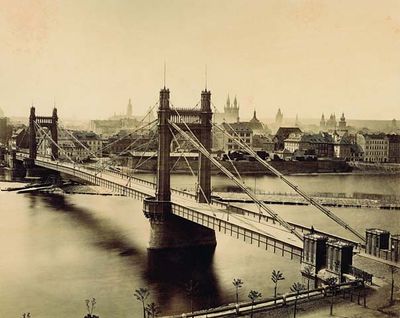
The Franz Joseph Bridge was a suspension bridge that connected New Town and Holesovice across the Vltava River from 1868 to 1941. The structure spanned approximately 144 meters and stood out as one of the most advanced engineering works of its time in Prague.
British engineer Rowland Mason Ordish designed the bridge using his innovative Ordish-Lefeuvre system, and Emperor Franz Joseph himself attended the opening ceremony in 1868. The structure was later demolished in 1941 when a reinforced concrete bridge was built to handle growing traffic demands.
Prague residents called it Eliščin most (Elizabeth Bridge) after the emperor's wife, Alžběta, alongside its official name. From 1898 a tram line ran across it, replacing the earlier horse-drawn tram, and the bridge carried traffic between the city and the Královská obora hunting ground.
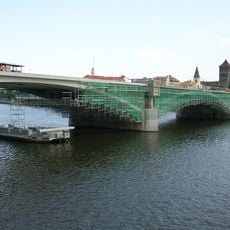
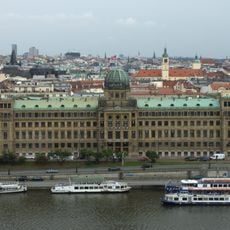
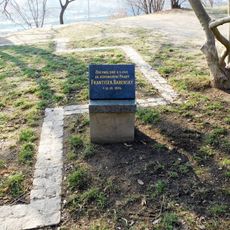
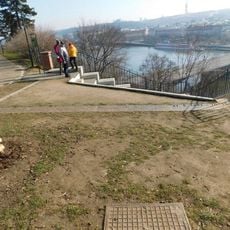
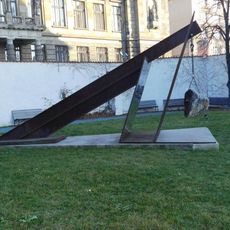
The bridge stood at the end of today's Revoluční třída, linking the New Town bank with Bubny and the Royal Game Reserve; the site is now occupied by the 1951 Štefánik Bridge. The most valuable parts of the iron structure were placed in the depository of the National Technical Museum, so the original span can be studied there rather than on the river.
The bridge underwent several name changes throughout its history, being renamed after different figures that reflected Prague's shifting politics. It was eventually called the Janáček Bridge in honor of the composer before its final demolition.
The community of curious travelers
AroundUs brings together thousands of curated places, local tips, and hidden gems, enriched daily by 93,802 contributors worldwide.