Wälsches Spital, Baroque hospital building in Malá Strana, Prague, Czech Republic
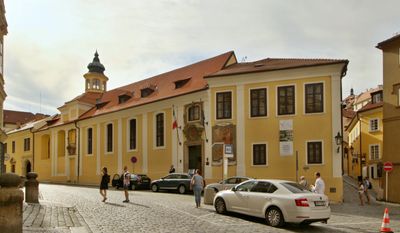
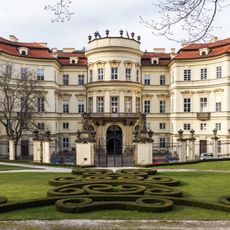
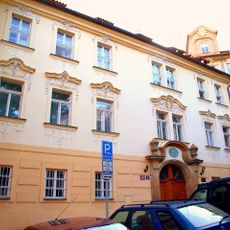
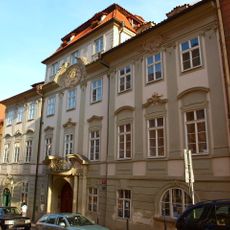
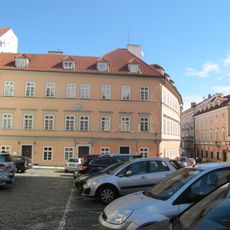
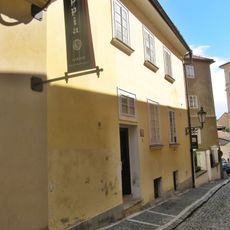
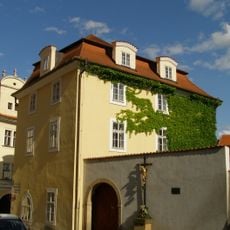
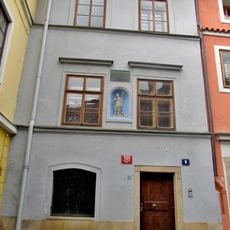
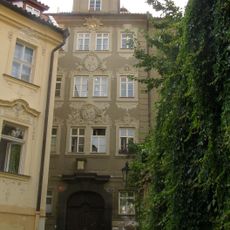
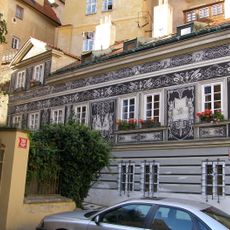
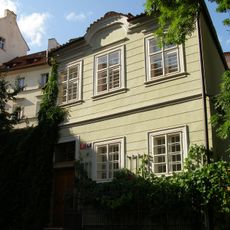
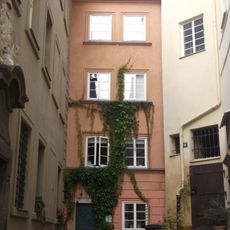
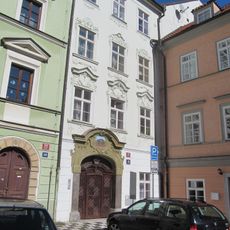
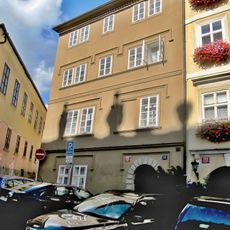
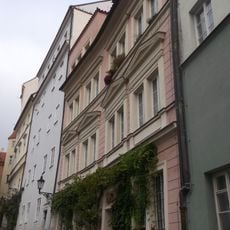
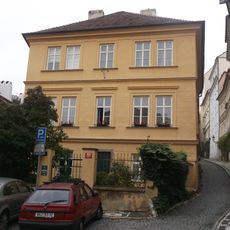
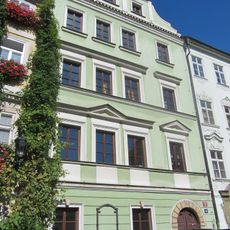
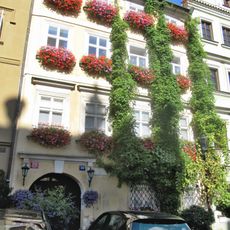
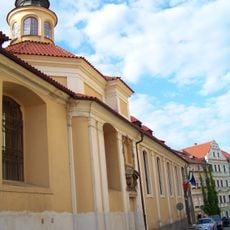
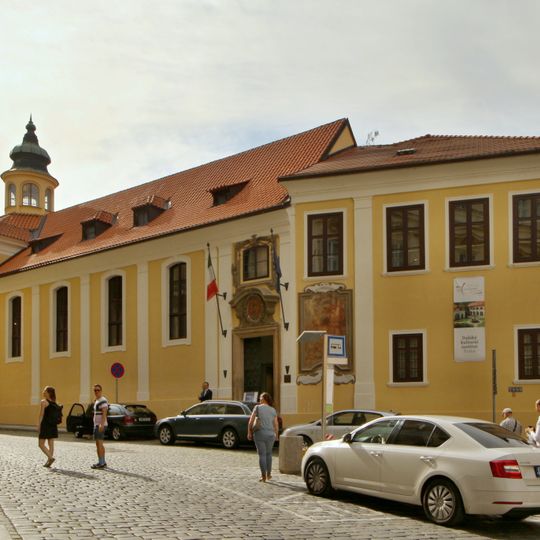
The Vlašský špitál is a four-winged Baroque building around a diamond-shaped courtyard at the corner of Šporkova and Vlašská streets in Malá Strana. Its complex includes the former chapel of the Virgin Mary and St. Charles Borromeo. The entrance portal from 1724 is attributed to Bartolomeo Scotti.
The Italian community of Prague built the charitable hospital between 1611 and 1617, after builder Domenico de Bossi sold them his house in 1602; he is said to have led the construction of the building and its chapel. The early Baroque two-winged house was altered in 1622 and 1643-1645, and in 1654 a garden, another wing and a cemetery were added. A state reform abolished the institution in 1789, when it housed 76 poor and 714 working orphans.
The name "Vlašský" comes from the Italian residents of Prague who expanded their activities to Malá Strana in the early 17th century. The complex later housed a silk-spinning school for orphans, and from 1951 it has served as the Italian Cultural Institute in Prague.
The four-winged building stands at the corner of Šporkova and Vlašská streets, around a diamond-shaped courtyard; the former chapel of the Virgin Mary and St Charles Borromeo is part of the complex. Since 1951 it has housed the Italian Cultural Institute, so the interiors are not a sightseeing stop; the 1724 high-Baroque entrance portal, attributed to Bartolomeo Scotti, is the detail to look for from the street.
The hospital ran its own small brewery from the start, producing a weak "silk" beer for staff and residents; children were entitled to one beer with one roast. From 1749 the orphanage taught silk spinning, and a commercial congress bought mulberry trees for it in 1757. Silk was made here until the institution closed in 1830.
The community of curious travelers
AroundUs brings together thousands of curated places, local tips, and hidden gems, enriched daily by 94,497 contributors worldwide.