Cedar Lake East Beach, Sandy beach at Cedar Lake, Minneapolis, United States
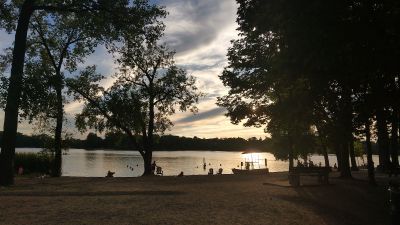
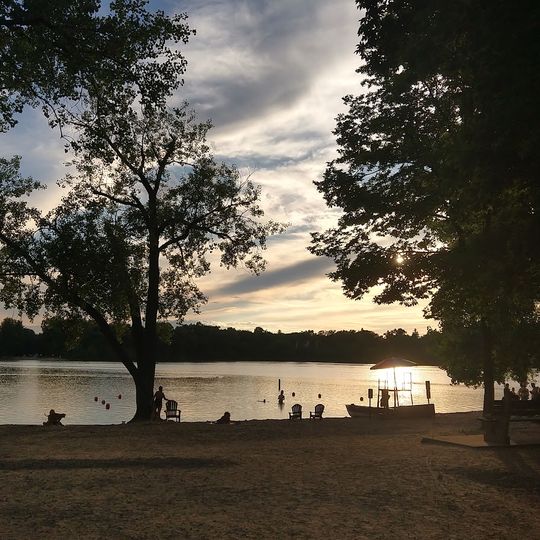
Cedar Lake East Beach is a sandy shore on Cedar Lake in Minneapolis where visitors find drinking fountains, walking paths along the waterfront, and direct water access for swimming and recreation. The beach spans a natural shoreline that opens onto the lake with nearby green spaces for picnicking.
Before 1867 Cedar Lake was larger, and the St. Paul and Pacific Railway built an earthen causeway through a bay on its east side; from 1871 the Minneapolis and St. Louis Railroad ran parallel tracks there. Cinders and fill gradually raised the land east of the causeway, and by 1900 Dingley's boat house stood on a peninsula that widened into the beach site. In 1913 the lake was lowered 5 feet to join Lake of the Isles.
The beach's nickname, Hidden Beach, came from its seclusion: it was reached only by a deer-path-sized trail through the woods. From the 1960s it drew a countercultural crowd that spent whole days on the sand, and the 1985 Hüsker Dü album New Day Rising was photographed here.
The beach sits at the end of a wooded path off Upton Avenue South; in 2007 neighbors approved graveling that path so service and police vehicles could reach the shore. A permanent police-only parking lot stands on the beachside, and a metal lifeguard stand replaced the original wooden one after it burned down.
The cover of Hüsker Dü's 1985 album New Day Rising was shot at Hidden Beach. The band's connection to the spot reflects its draw for the local arts scene, which gathered at the secluded shore in the 1980s.
The community of curious travelers
AroundUs brings together thousands of curated places, local tips, and hidden gems, enriched daily by 92,794 contributors worldwide.