Toro Muerto, Archaeological site in Castilla Province, Peru.
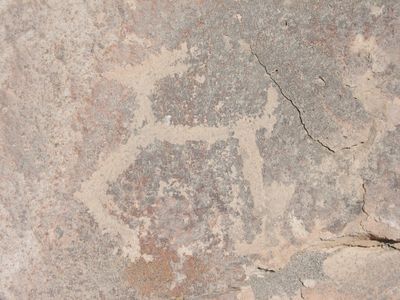
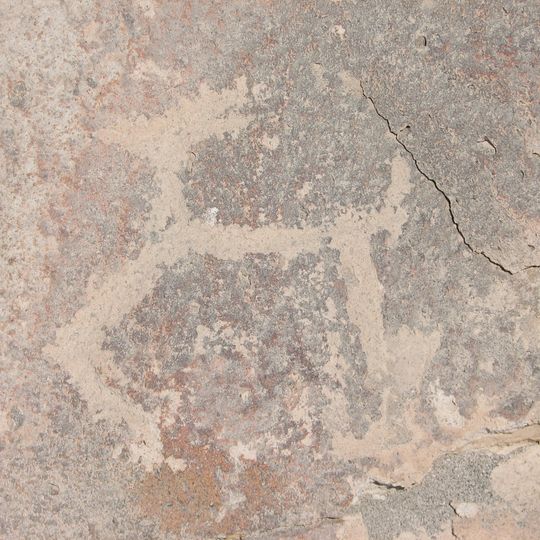
Toro Muerto is a petroglyph field in the Majes valley, Castilla Province, where more than 6000 volcanic boulders lie across 5 km² of desert between 400 and 800 m above sea level. The stones are cut in low relief with geometric and anthropomorphic figures, birds, quadrupeds and reptiles. The rock itself is light gray and beige with reddish-brown mottling, small pits and pores, and thin dark cracks; no inscription or carved figure is visible on the photographed surface.
The petroglyphs at Toro Muerto were made by the Wari culture, which was active from 500 to 1000 AD. The site lies in the Majes valley, and the Wari were a Middle Horizon civilization that flourished in the south-central Andes and coastal area of modern-day Peru. In 2019 the site was added to Peru's Tentative List for UNESCO World Heritage status.
The name Toro Muerto means "Dead Bull" in Spanish. The engravings were made by the Wari culture, active from 500 to 1000 AD, and include geometric motifs, human figures, birds, quadrupeds and reptiles cut in low relief on volcanic blocks. The site was added to Peru's UNESCO Tentative List in 2019.
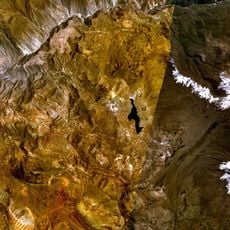
The engraved blocks lie between 400 and 800 metres above sea level in the Majes valley, reached by road about three hours from Arequipa toward Lima or from the Colca valley. The 5 km² site is open desert with stones scattered over uneven ground, so carry water and sun protection and allow time to walk between clusters.
The volcanic rocks originated from eruptions of the Coropuna and Chachani volcanoes millions of years ago, creating natural surfaces for ancient artists to work on. This geological foundation explains why this particular location was chosen and how the stones have endured through time.
The community of curious travelers
AroundUs brings together thousands of curated places, local tips, and hidden gems, enriched daily by 92,954 contributors worldwide.