Ampato, Dormant stratovolcano in southern Andes, Peru
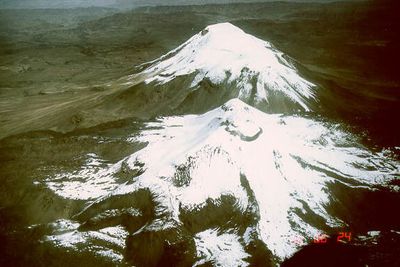
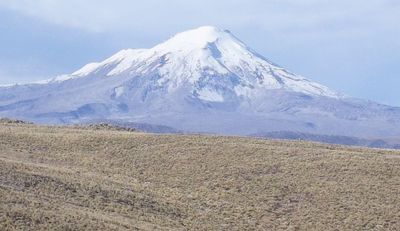
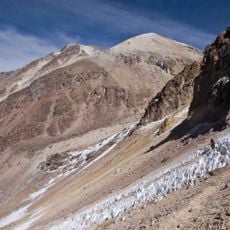
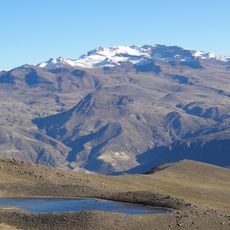
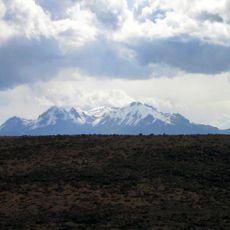
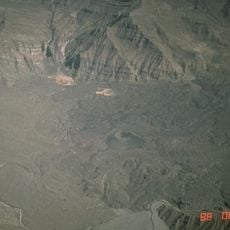
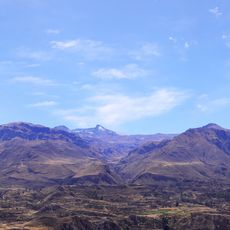
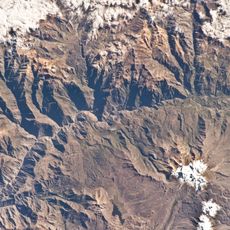
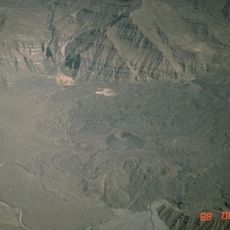
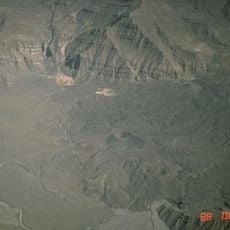
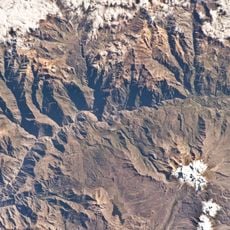
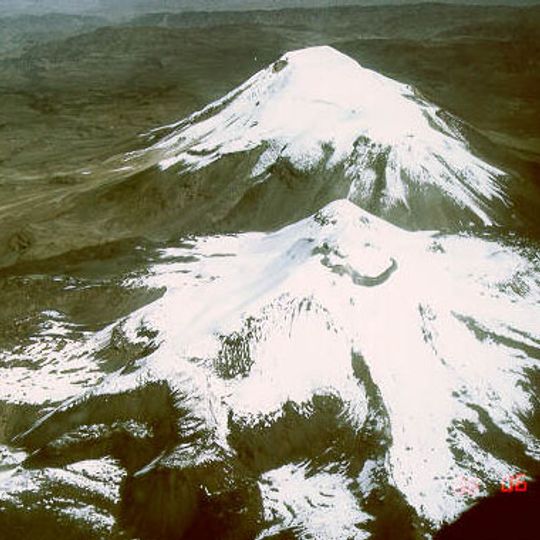
Ampato is a dormant stratovolcano in southern Peru's Andes composed of three volcanic cones rising from an eroded base to reach 6,288 meters in elevation. The mountain displays steep rock faces alongside ice-covered upper slopes, giving it a rugged appearance shaped by volcanic and glacial processes.
The first recorded ascent took place in 1966 when mountaineer R. Culbert reached the summit, though indigenous Peruvians likely arrived at the peak centuries before. Volcanic activity significantly shaped the region roughly 17,000 years ago when substantial lava flows carved out the present-day landscape.
The mountain holds spiritual meaning for Andean communities, as evidenced by the discovery of a frozen mummy in 1995 that was placed there as a ritual offering. This connection between the place and ancient practices remains alive in local perception.
The best climbing season runs from May through September when weather becomes more stable and the ascent to the ice-covered summit is easier. Visitors should prepare for high altitude conditions and bring warm gear, as conditions near the top are extremely harsh.
The mountain is connected to a frozen mummy that archaeologists discovered high in the ice fields in 1995, revealing insights into Inca rituals. This preserved body became one of the most important findings for understanding pre-Columbian high-altitude practices.
The community of curious travelers
AroundUs brings together thousands of curated places, local tips, and hidden gems, enriched daily by 91,895 contributors worldwide.