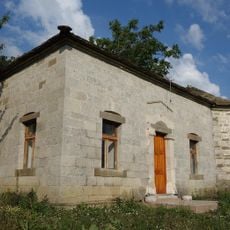
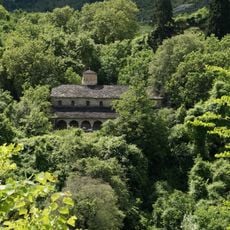
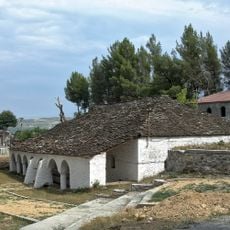
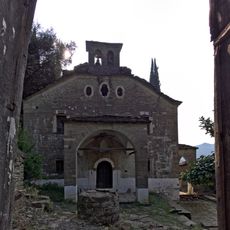
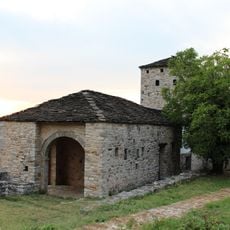
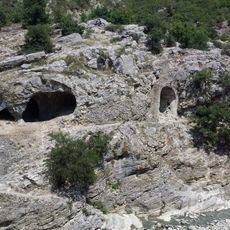
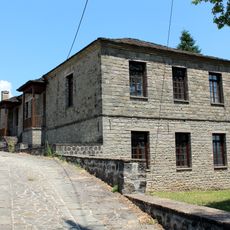
Borovë, Dressmaker shop in Borovë, Albania.
The dressmaker shop in Borovë is a small establishment where garments are made and altered to fit each customer's needs. Work here involves local fabrics and respects the clothing styles familiar to the mountain region.
Borovë is a village in Kolonjë, about six kilometres south of Erseka, probably founded by Slavs in the late 6th century; its name may derive from the Slavic word for pine. A first school opened there in 1912. On 6 July 1943 Wehrmacht soldiers burned all 100 buildings and killed 107 civilians, mostly children, women and the elderly, in reprisal for an attack on a German convoy.
The village name is probably derived from the Slavic word for pine, and settlement is dated to the late 6th century by Slavic founders. Since 1996 the German embassy in Tirana has backed infrastructure projects here, and the ambassador has attended commemorations. A monument and small museum once stood for the 1943 victims; the museum was destroyed in the 1997 unrest, and the 107 graves now form the centre of the memorial site.
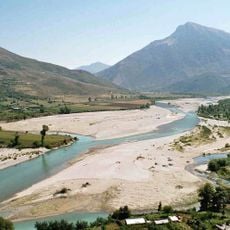
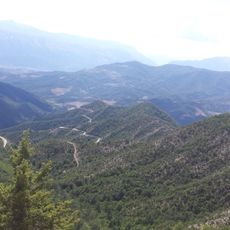
Borovë lies about six kilometres south of Erseka, on the only asphalted road in the Kolonjë region, the Korça–Përmet–Tepelena route and the sole direct link between southeastern and southern Albania. The village sits at roughly 960 m in hilly terrain, so the drive is slow; the 107 graves of the 1943 massacre form the centre of the memorial site.
Borovë is not a dressmaker's shop but a village in Kolonjë, six kilometres south of Erseka, on the only asphalted road linking Korça with Përmet and Tepelena. Its name may derive from the Slavic word for pine. The first school opened here in 1912, and the village had 333 inhabitants in 1989.
The community of curious travelers
AroundUs brings together thousands of curated places, local tips, and hidden gems, enriched daily by 94,583 contributors worldwide.