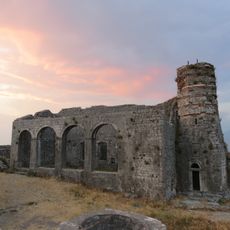
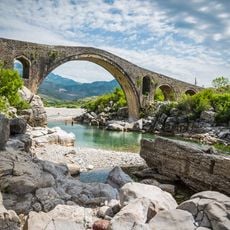
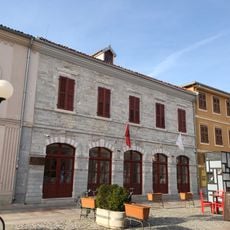
Lead Mosque, Shkodër, Ottoman mosque in Shkodër, Albania.
The Lead Mosque at the base of Rozafa Castle features a main dome and smaller cupolas covered with lead plates on its exterior. The structure incorporates local materials and displays typical religious architecture of the 1700s.
Mehmed Bushati, vizier of the Pashalik of Scutari, built the mosque in 1773 to give his birthplace the standing of a capital; an inscription over the gate gives the year 1187 AH. Xhelal Bushati rebuilt the minaret in 1920, and the building was closed in 1967 under Enver Hoxha. On 16 November 1990 Hafiz Sabri Koçi held the first religious rally here after 23 years of state atheism.
The name comes from the lead sheets that once covered its domes, later stolen and finally removed by the Austro-Hungarian army in 1916. A carved plaque above the gate records Mehmed Pasha's foundation in 1187 AH (1773/74) and repairs by Haxhi Mahmud Berberi in 1280 AH (1863/64).
The mosque stands on the plain east of Rozafa Castle hill, in the Tabake neighbourhood linked to the bazaar. Restoration by the Albanian and Turkish governments began in 2021, after earlier repairs in 1863, 1920 and 1963. The prayer hall measures 9.15 m² inside walls of 12.50 by 13.80 m, entered through a wide courtyard set obliquely before it.
The lead covering on the cupolas is unusual and gave the building its name, a rare feature in Albanian religious architecture. This distinctive material choice sets it apart from other mosques in the region.
The community of curious travelers
AroundUs brings together thousands of curated places, local tips, and hidden gems, enriched daily by 93,786 contributors worldwide.