Basilica of Saint Michael, Minor basilica in Arapaj, Albania.
The Basilica of Saint Michael is a ruined three-lobed basilica oriented east, about 60 meters long, with a narthex, atrium, and three apses. Its central nave and two aisles were separated by arcades, and a small burial chamber on the south side holds a polychrome floor mosaic of about 54 square feet, now covered with gravel for conservation.
Built in the 5th–6th centuries, the basilica's atrium pavement bears a monogram from the reign of Emperor Anastasius I (491–518). It was used until the 11th century, when Norman troops under Robert Guiscard burned it after taking Dyrrachion in 1081. Guards of Emperor Alexios I Komnenos who fell in battle were buried in the ruins. Rediscovered in 1974 by Hava and Sali Hidri, it was excavated in 1981–1983.
The basilica is named for the Archangel Michael, to whom it was dedicated. Its floor mosaics show two scenes: a couple seated outdoors with their dogs, horses, goats and sheep, and a two-eared crater whose wine flows toward a stag and a cow. The first is read as the couple's paradise, the second as a reference to Christ's death and the Eucharist.
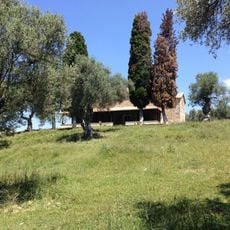
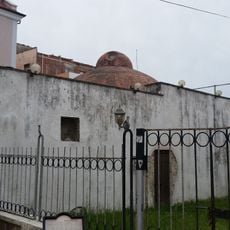
The site is located on an archaeological dig near Durrës and is enclosed by a fence to protect the remains. Visit in the morning when it is cooler and the light is better for viewing the excavated structures.
The polychrome mosaic over the south-side tomb, about 54 square feet, shows a seated couple with their dogs, horses, goats and sheep, and a two-eared crater whose wine flows to a stag and a cow. It is covered with gravel for conservation, so visitors cannot see it.
The community of curious travelers
AroundUs brings together thousands of curated places, local tips, and hidden gems, enriched daily by 94,154 contributors worldwide.