Horomayri Monastery, Medieval monastery near Debed Gorge, Armenia
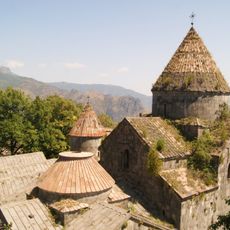
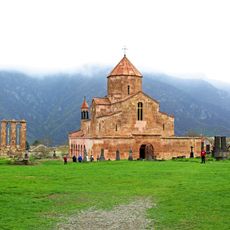
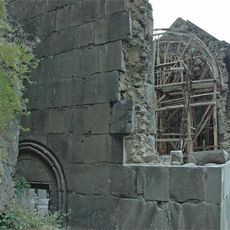
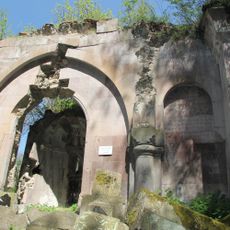
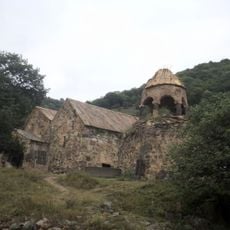
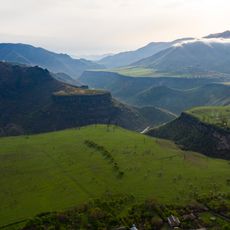
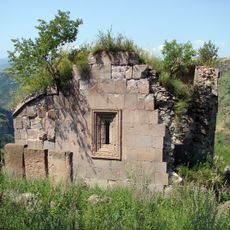
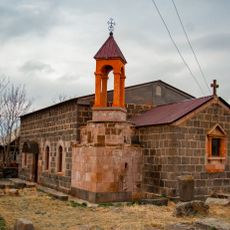
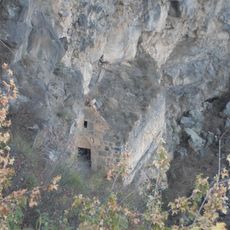
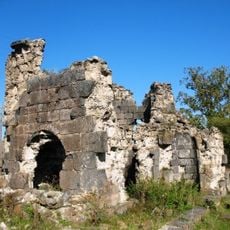
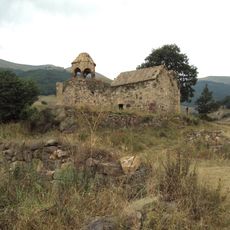
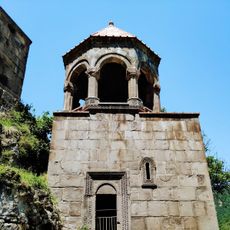
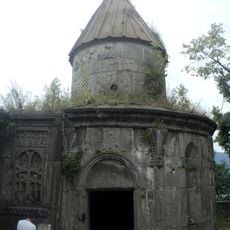
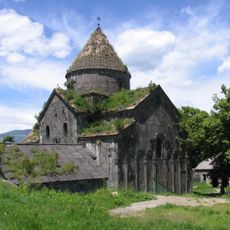
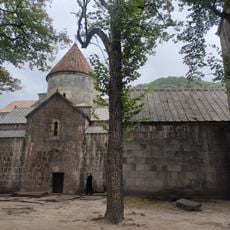
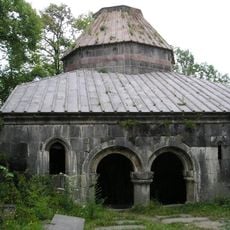
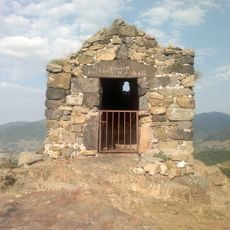
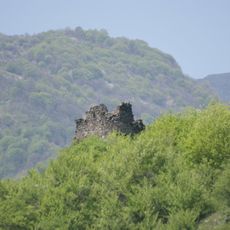
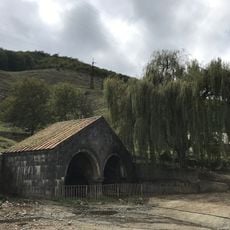
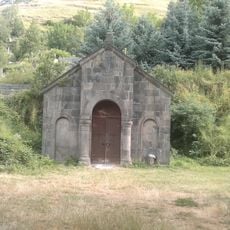
Horomayri Monastery consists of two groups of monuments in Lori Province: an upper group on the plateau at the gorge edge, once called Dzorayegi Monastery, and a lower group beneath a vertical rock wall on the left slope of the Debed, once called Surb Nshan or Dzoramiji Monastery. The upper group has two churches, a gavit and a medieval cemetery; the lower group has a church-bell tower, a chapel, khachkars and rock-cut caves, with the canyon wall forming one of the structures' four walls.
The monastery was founded in the late 12th century, with St Mark's Church built in 1187 by Princes Zakare and Ivane Mkhargrdzeli. Abbot Samuel expanded the complex around 1206 with further structures.
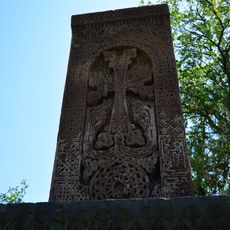
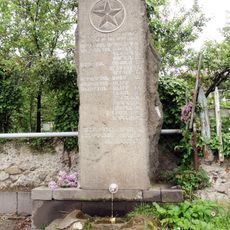
The name Horomayr comes from a Greek prince of the Chalcedonian faith who lived as a hermit in one of the site's caves. Visitors can see khachkars and tombstones of the 13th century in the monastery cemetery around the complex, and a relief of the Virgin and Child on the lintel of the single northern entrance of St Nshan Church.
The monastery is reached via a hiking trail of about 1.5 kilometers from Odzun village, descending steeply along the cliff face toward the Debed River. The terrain is uneven and exposed, so sturdy footwear and caution are essential, especially in wet or windy conditions.
The complex is split into two groups: the Upper Monastery, also called Dzorayezri, and the Lower Monastery, called Surb Nshan or Dzoramiji. The lower group's buildings are strung out in a line because the narrow ledge left no room to spread, the same solution used at Bardzrakash's St Virgin Church.
The community of curious travelers
AroundUs brings together thousands of curated places, local tips, and hidden gems, enriched daily by 92,637 contributors worldwide.