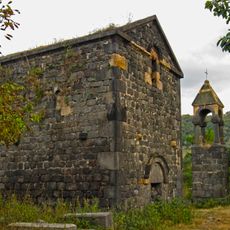
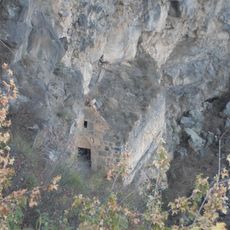
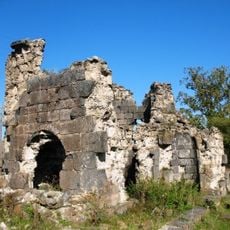
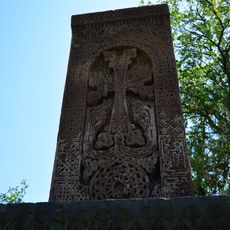
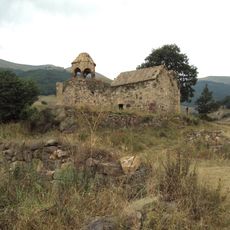
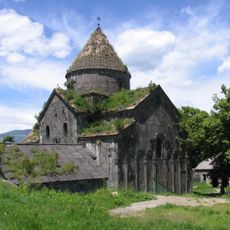
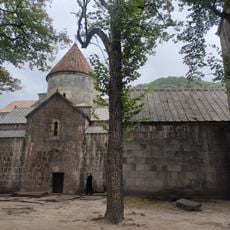
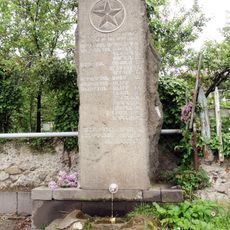
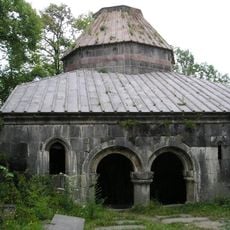
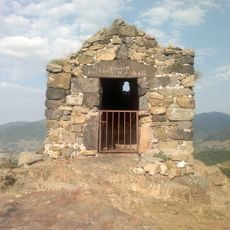
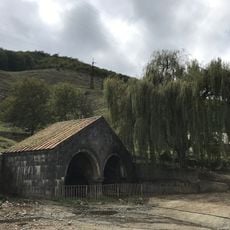
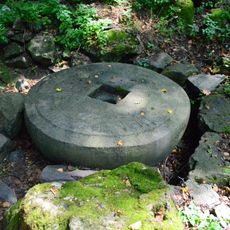
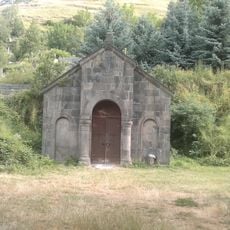
Kobayr monastery, Medieval monastery ruins in Tumanyan, Armenia.
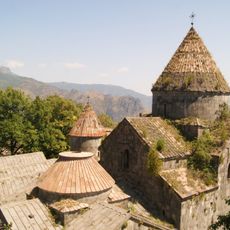
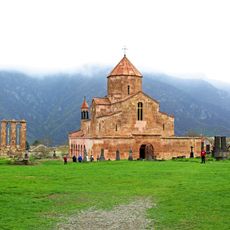
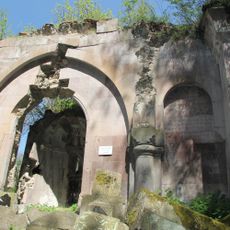
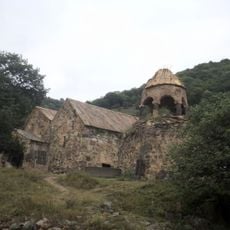
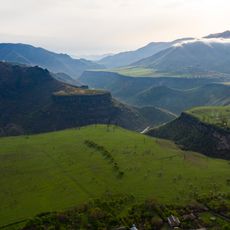
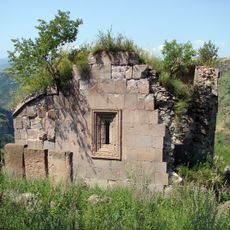
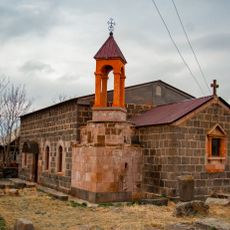
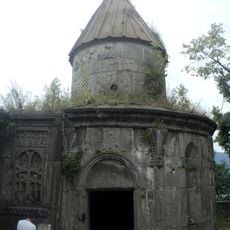
Kobayr Monastery is a ruined medieval Armenian monastery on a high terrace above the Debed River gorge near Tumanyan. Its main church, two chapels linked by a passage, a bell tower-tomb, a refectory and fortification walls survive in half-ruined state. The complex is known for frescoes painted in Armenian, Byzantine and Georgian traditions, and for inscriptions in Armenian and Georgian.
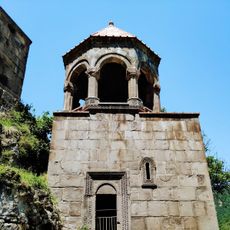
Founded in 1171 by Princess Mariam of the Kyurikid branch of the Bagratuni house, the monastery passed to the Zakarian family by the mid-13th century. Under Shahnshah and his son Zakaria it became a Chalcedonian (Georgian Orthodox) house, and Shahnshah was buried here after 1261. Between 1276 and 1282 the monk Gregory had annexes built and the altar decorated with frescoes; a bell tower was added in 1279.
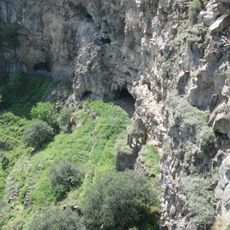
The name derives from the Georgian word kob for "cave", referring to the rock-cut gorge. Georgian inscriptions and ornament appear on parts of the complex after the monastery passed to the Chalcedonian Zakarians, while earlier Armenian inscriptions remain. The refectory and chapels stand roofless among the ruins.
The site is reached by a walking trail that winds through the area and connects to other medieval structures nearby. Visitors should expect uneven ground and steep sections, especially along the cliff edge overlooking the river.
The bell tower built in 1279 functions as both a structural element and a burial site holding the tombs of Prince Zakarian and his wife Vaneni. This combination of practical use and memorial purpose shows the family's importance to the complex.
The community of curious travelers
AroundUs brings together thousands of curated places, local tips, and hidden gems, enriched daily by 92,823 contributors worldwide.