Caucasus mixed forests, WWF ecoregion in Armenia, Azerbaijan, Georgia, Iran, Russia, and Turkey
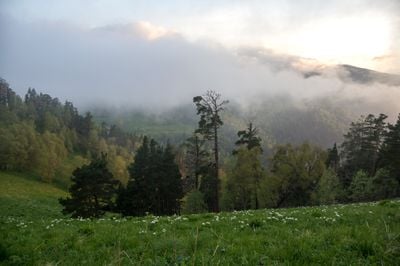
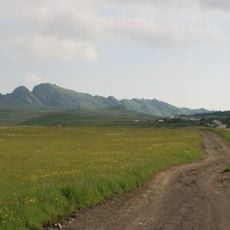
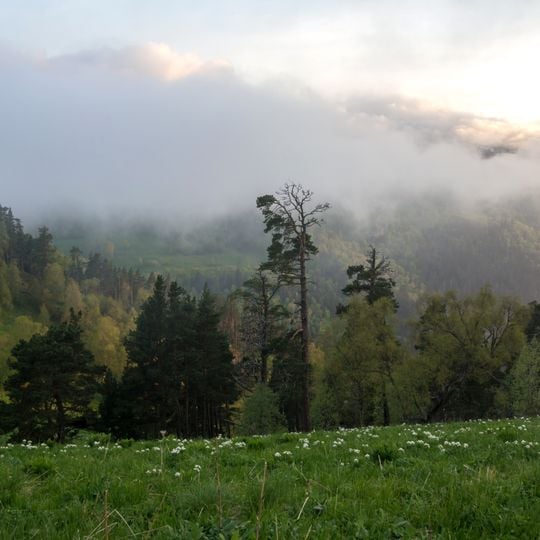
The Caucasus mixed forests are a WWF ecoregion covering mountain terrain between the Black Sea coast and the Caspian Sea, across Russia, Turkey, and Georgia. Tree species and forest density shift with altitude and rainfall, ranging from dense broadleaf woodland in the lower valleys to more open ground on the upper slopes.
These forests have existed in roughly their current form since the end of the last ice age, making them one of the oldest surviving temperate woodland areas. Parts of the Caucasus remained ice-free during glaciation and acted as refuges where plants and animals survived that disappeared elsewhere.
The ecoregion spans Armenia, Azerbaijan, Georgia, Iran, Russia and Turkey, and its forests have long supplied local communities with timber, fuel and food. Sweet chestnut grows in the humid western mountains, while walnut, chestnut and beech feature in cooking and craftwork. The ecoregion also takes in the eastern end of the Pontic Mountains along the Black Sea's southern shore.
Access varies greatly depending on which country and area you enter from, so checking local protected area rules before visiting saves time and avoids surprises. Trails on the higher slopes tend to be steep and not always well marked, so solid footwear and a generous amount of time are worth planning for.
The Caucasus region has more tree species than all of northern Europe combined, with many oak, beech, and chestnut varieties found nowhere else. Some of these trees are the direct ancestors of varieties now grown in orchards across Europe and western Asia.
The community of curious travelers
AroundUs brings together thousands of curated places, local tips, and hidden gems, enriched daily by 92,627 contributors worldwide.