Ateni Sioni Church, 7th-century Orthodox church in Ateni village, Georgia
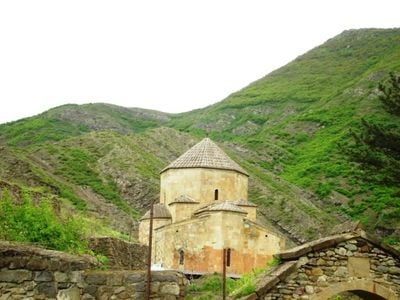
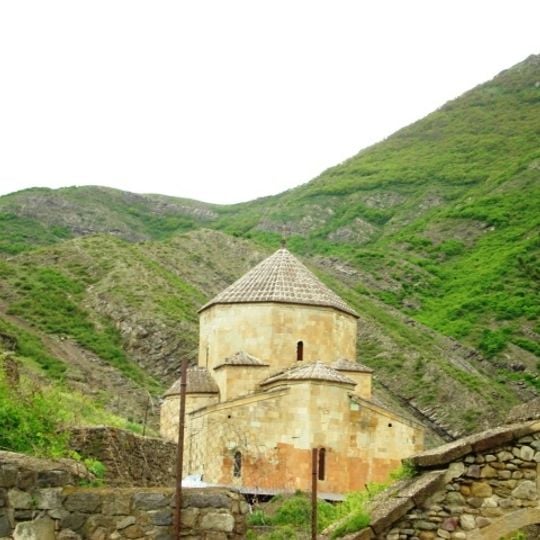
Ateni Sioni is a 7th-century church located in a small village south of Gori, built with a tetraconch design featuring four apses around a central space topped by a dome. The structure stands as a solid stone building with multiple cylindrical niches that support the main vault above.
The church is not dated by any document but closely resembles the Jvari Monastery at Mtskheta, generally held to have preceded it, so art historians place it in the early 7th century. An undated Armenian inscription on the southern facade names Todosak as "the builder of this holy church," identified as either the original architect or the late 10th-century renovator. In the 10th century the upper facades were faced with carved greenish-gray stone, and the interior was painted in the second half of the 11th century.
The interior walls display early examples of Georgian Nuskhuri and Mkhedruli scripts, showing how people recorded their religious life in writing during medieval times. These inscriptions reveal the everyday spiritual practices of the communities that worshipped here.
The church sits roughly 12 kilometers south of Gori with road access and parking facilities nearby. Visitors will find it in an open setting that requires a short walk from where vehicles are left.
The walls display two distinct stone colors with greenish-gray stones in the upper sections and reddish ashlar stones below, many adorned with carved decorative patterns. This color contrast resulted from using locally available materials that were quarried at different times.
The community of curious travelers
AroundUs brings together thousands of curated places, local tips, and hidden gems, enriched daily by 94,547 contributors worldwide.