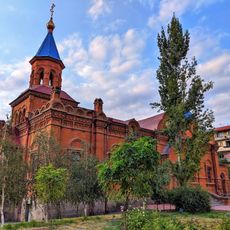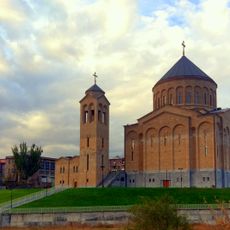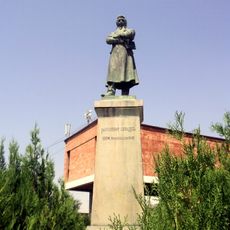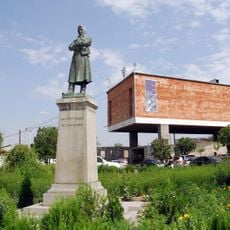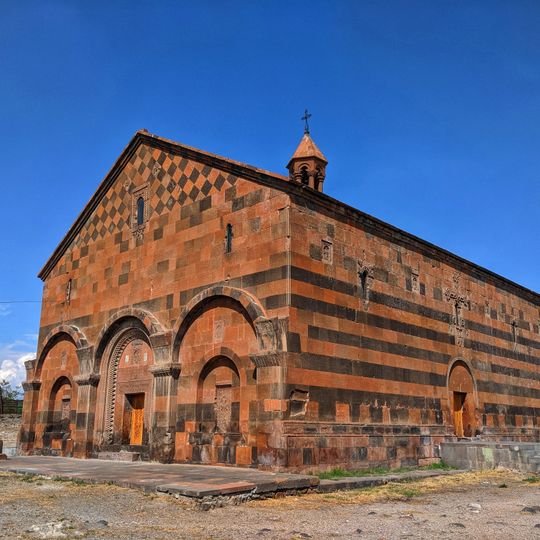
Surb Astvatsatsin Church, Armenian church in Kanaker district, Yerevan, Armenia
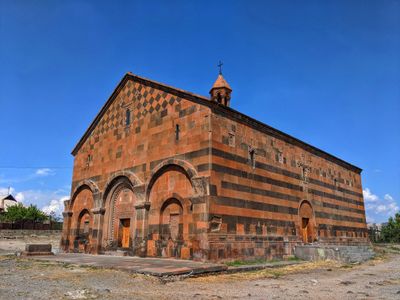
Surb Astvatsatsin Church is a three-nave basilica in Kanaker, with two pairs of piers in the prayer hall, a main altar on the east side flanked by two adjoining chambers, and entrances on the south and west. Its interior walls hold 15th–17th-century khachkars, one signed by a carver named Keram.
The church was damaged in the earthquake of 1679. An inscription on its wall records that it was rebuilt in 1695 at the expense of the local residents. It belonged to a monastic community, with monastic living quarters and other walled buildings around it. In the Soviet period it closed and served as a warehouse; after independence the Armenian Society for the Protection of Historical Monuments repaired it.
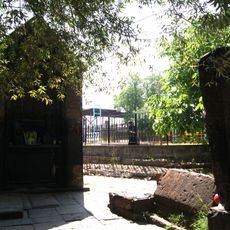
The church is named for the Virgin Mary (Surb Astvatsatsin) and belongs to the Armenian Apostolic Church. Its wall inscription records that local residents paid for the 1695 construction, and the church once had monastic living quarters and other monastery buildings inside a walled enclosure. In the churchyard is the grave of Aghasi, hero of Khachatur Abovyan's novel "Wounds of Armenia".
The church stands in the Kanaker district of Yerevan, with entrances on its south and west sides; the west door is the usual way in. Inside, two pairs of piers divide the prayer hall into three naves, with the main altar and its two adjoining side chambers at the east end. The churchyard holds the grave of Aghasi, hero of Khachatur Abovyan's novel Wounds of Armenia.
The carved khachkars are set into the interior walls, not the exterior, and date from the 15th to 17th centuries. One of them names its maker, Keram. In the churchyard lies the grave of Aghasi, hero of Khachatur Abovyan's novel "Wounds of Armenia".
The community of curious travelers
AroundUs brings together thousands of curated places, local tips, and hidden gems, enriched daily by 92,764 contributors worldwide.