Ptghnavank, Medieval temple in Ptghni, Armenia
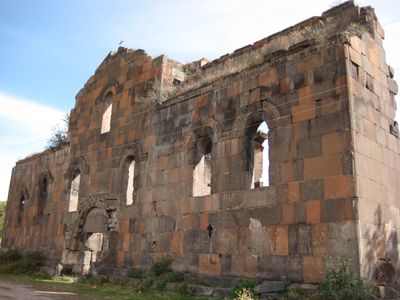
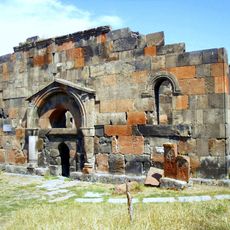
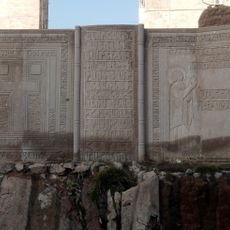
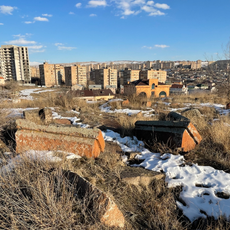
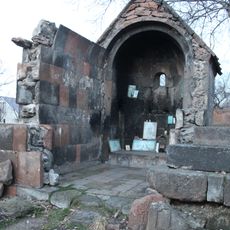
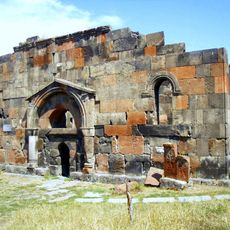
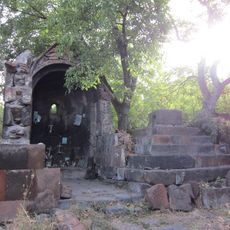
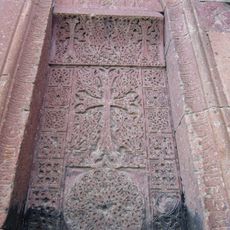
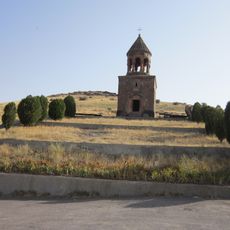
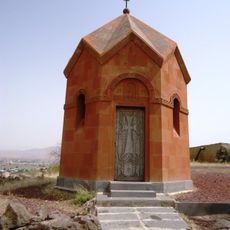
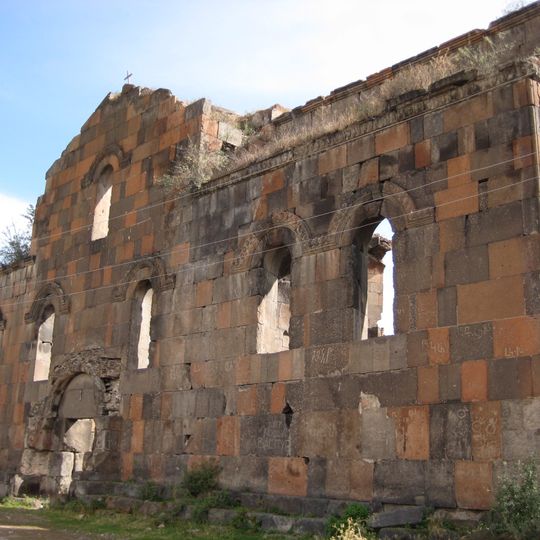
Ptghnavank is a temple in the village of Ptghni whose remains date from the 6th or 7th century. The surviving sections include parts of the north wall, remnants of the south wall, and one of the four original dome support arches.
Built at the end of the 6th or the beginning of the 7th century, the exact year is unknown. It is the earliest and best example of the domed-hall type of church in Armenian architecture. The building measures 15.7 m wide and 30.4 m long, with a prayer hall 10.3 m wide and 23.8 m long. The dome, drum and vaults have long since collapsed.
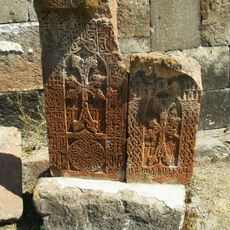
The south facade's surviving window arch carries reliefs described as exceptional examples of early medieval Armenian art: the Virgin, Christ and the apostles, alongside secular scenes. One shows a horseman, labelled "Manuēl Amatuneac Tēr", shooting an already wounded beast; to his right a man fights a lion with a spear, likely his son Sahak Amatuni.
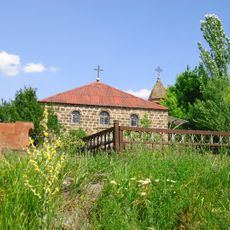
The temple is located in Kotayk Province and reached through the village of Ptghni. Visitors should be prepared for uneven ground and limited signage at the site.
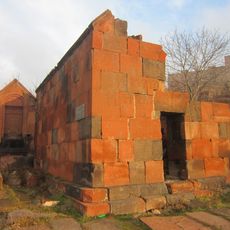
The walls bear marks left by medieval stone masons that reveal how workers organized their labor and shaped stones during construction. These traces provide insight into the practical methods used to build religious structures in this region.
The community of curious travelers
AroundUs brings together thousands of curated places, local tips, and hidden gems, enriched daily by 92,718 contributors worldwide.