Caravanserai in Jrapi, Medieval caravanserai in Jrapi, Armenia
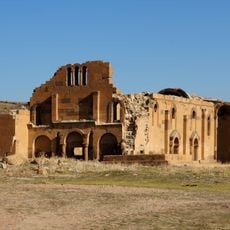
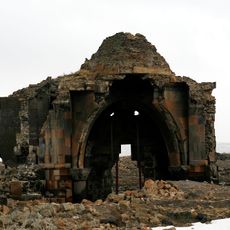
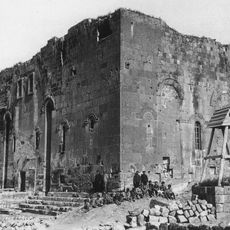
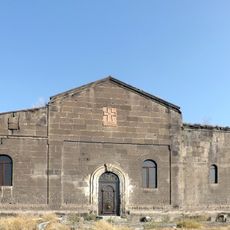
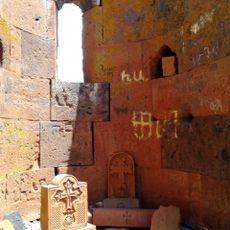
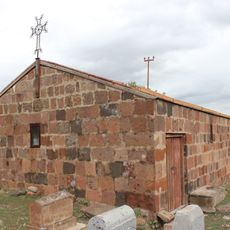
The caravanserai in Jrapi is a rectangular stone building with walls roughly 1.75 meters thick that create three naves separated by two rows of columns with circular arches. The central nave rises higher than the side sections and is supported by nine square pillars joined by rounded arches beneath a peaked roof.
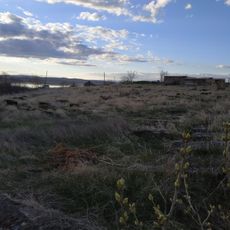
The caravanserai is a 10th–11th century structure of the single-hall, three-nave arched type, built on the main road from Georgia and Armenia's northern provinces to Ani. It originally stood near the bridge over the Akhurian; its stones were later measured, moved and rebuilt beside the main road in present-day Jrapi, founded in 1970 when Lower Jrapi (Chrpli) and Upper Jrapi were resettled for the Akhurian reservoir.
Locals tell stories about the caravanserai, and travellers still stop here to rest from the road. The building was moved stone by stone from its original site near the Akhurian bridge and rebuilt beside the main road in Jrapi, keeping its former appearance as far as possible.
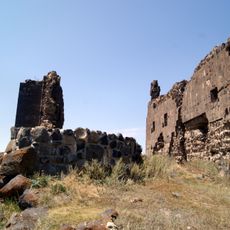
The ruins stand beside the main road in Jrapi, the village founded in 1970 when the Akhuryan reservoir displaced Nizhniy Jrapi and Verkhniy Jrapi. The stones were measured and rebuilt here in their former appearance, so the structure is a reconstruction rather than the original site. The surviving section is a three-nave hall 31 m long and 13.65 m wide, oriented north to south.
The caravanserai was moved from its original site near the Akhurian river bridge: its stones were measured, carefully transported and rebuilt beside the main road in today's Jrapi village, keeping the former appearance as far as possible. The present village itself was founded in 1970 when Lower Jrapi (Chyrply) and Upper Jrapi (Gheghaj) were resettled for the Akhurian reservoir.
The community of curious travelers
AroundUs brings together thousands of curated places, local tips, and hidden gems, enriched daily by 92,628 contributors worldwide.