Yereruyk Basilica, Early Christian basilica in Anipemza, Armenia
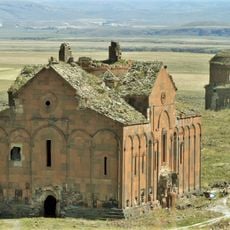
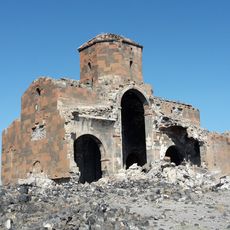
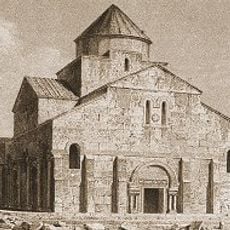
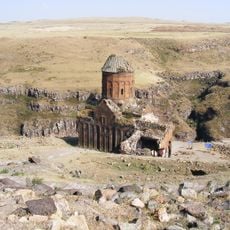
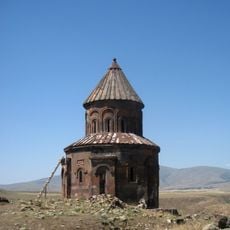
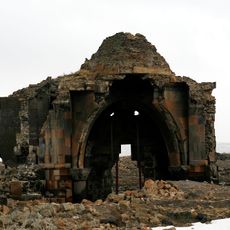
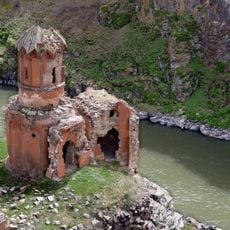
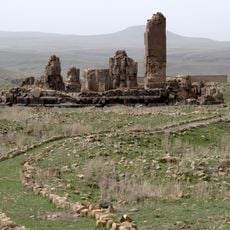
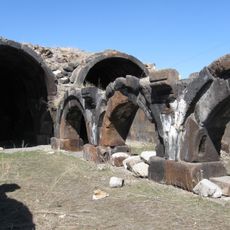
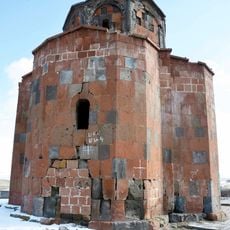
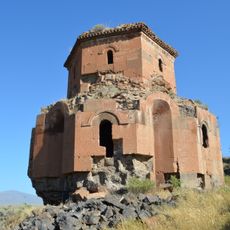
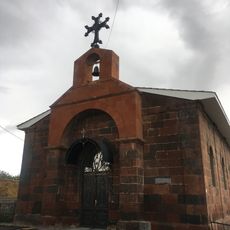
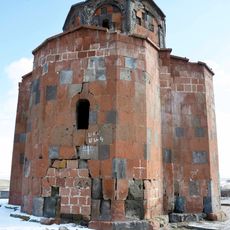
Yereruyk Basilica is an early Christian church in Anipemza with three naves supported by six pillars made of orange tufa stone. The structure sits on an elevated platform near the Akhurian River and shows the craftsmanship of early Armenian builders.
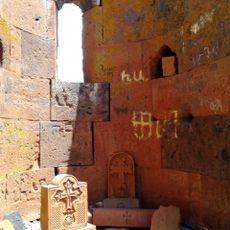
Yererouk was begun in the 4th century, resumed in the 5th and completed in the 6th, though no historical source names its founders, so the dating rests on stratigraphic tests, sculpture and comparison with Syrian churches. In the 11th century King Hovhannes-Smbat's wife funded repairs, recorded in an inscription left of one entrance. It was added to the UNESCO Tentative List on 25 August 1995.
The name Yererouk means "quivering" in Armenian. Popular tradition links it to the six columns, which make the structure seem to tremble when viewed from a distance. The basilica was a martyrial sanctuary: an inscription on the pilaster at the north-east corner of the apse names the Precursor and the Protomartyr, Saints John the Baptist and Stephen.
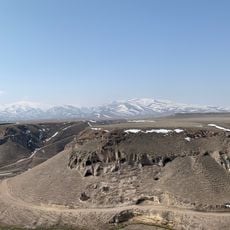
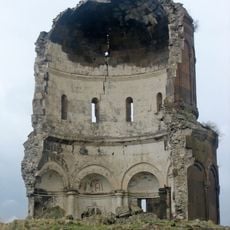
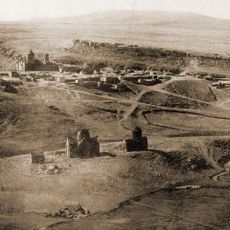
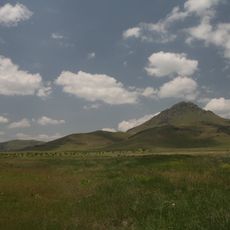
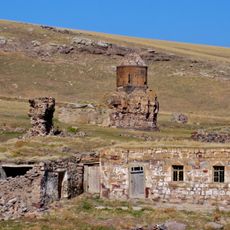
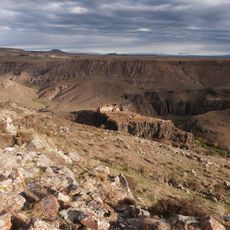
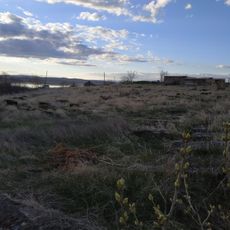
The site lies on a rocky plateau above the Akhurian River, about 5 km southeast of Ani and near Anipemza village. The stepped base of 5 to 7 steps is largely broken and scattered, and the colonnaded halls have collapsed, so walking calls for care on loose stone. The foundations rest directly on rock, with no continuous platform.
The apse pilaster at the north-east corner carries an inscription naming the church a martyrion "of the Precursor and the Protomartyr", that is Saint John the Baptist and Saint Stephen. The building was thus a martyrial sanctuary, a function rarely stated so plainly in early Armenian churches.
The community of curious travelers
AroundUs brings together thousands of curated places, local tips, and hidden gems, enriched daily by 92,690 contributors worldwide.