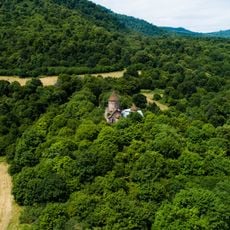
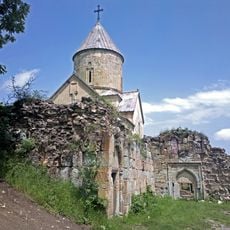
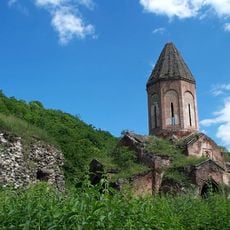
Arakelots church, Medieval monastery complex in Tavush Province, Armenia
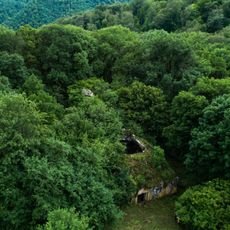
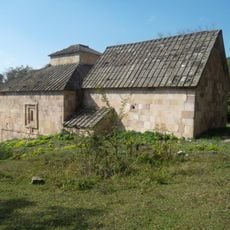
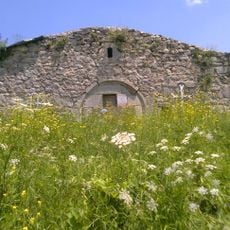
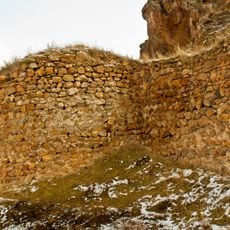
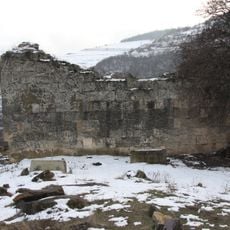
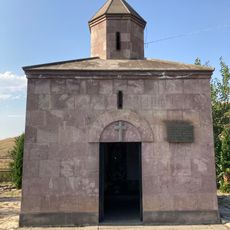
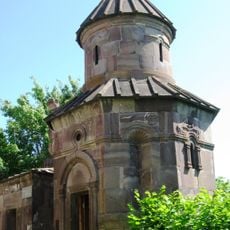
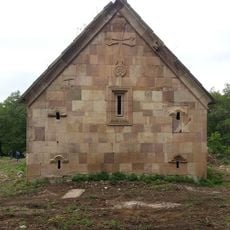
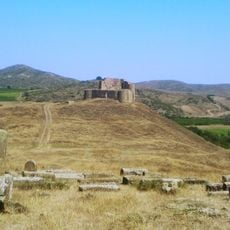
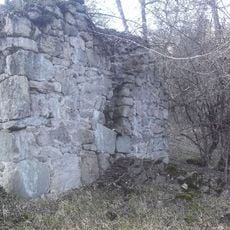
Arakelots Monastery consists of two churches within a walled hilltop complex: the main church, a small domed hall measuring 10.25 by 7.45 meters, built against the north wall, and a smaller one-nave basilica. A square gavit with a tent-shaped roof and intersecting arches adjoins the main church to the west. The main church is faced with milky, yellow and blue hewn stone and plastered with lime inside.
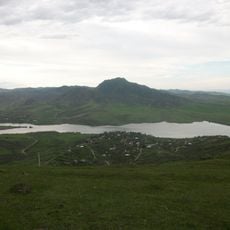
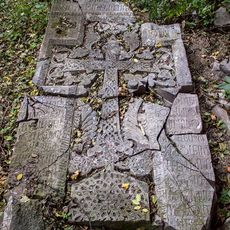
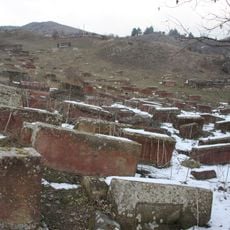
Arakelots Monastery is a 13th-century foundation, not 12th-century as sometimes stated. In the Middle Ages the Aghstev valley and its slopes were densely settled; the monastery and village formed one of the large settlements of Kayen province, a gateway on trade routes linking Georgia and Aghvank with central Armenia. No literary references survive; the only witnesses to its historical life are the lapidary inscriptions. In March 2025 the monastic complex and the adjacent ancient village ruins were added to the list of European sites most at risk of destruction.
The monastery's name, Arakelots, means "Monastery of the Apostles" in Armenian. The main church has no carved decoration or inscriptions inside or out; its only ornament is the banding of milky, yellow and blue hewn stone on the exterior walls, while the interior is plastered with lime. Remains of wall paintings survive inside.
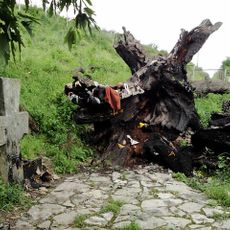
Access involves traveling up a dirt road that requires some effort and proper footwear for the uphill terrain. It is helpful to seek assistance from local residents nearby to open the entrance gate and allow entry.
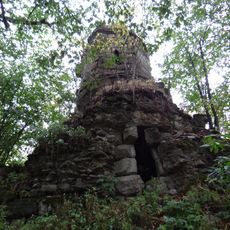
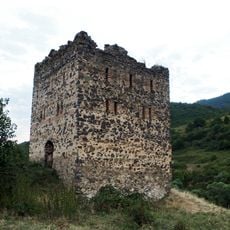
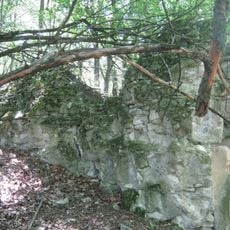
The caravanserai ruins lie about 80 metres downhill from the monastery, not a kilometre away. The complex also includes a gavit, or zhamatun, added against the main church's west wall, whose intersecting arches frame a central opening covered with 20 cm thick slabs.
The community of curious travelers
AroundUs brings together thousands of curated places, local tips, and hidden gems, enriched daily by 92,894 contributors worldwide.