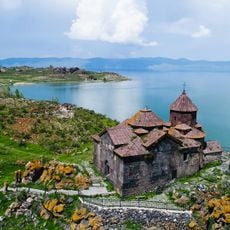
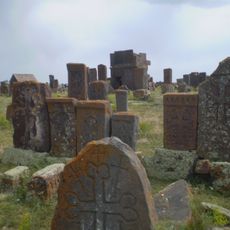
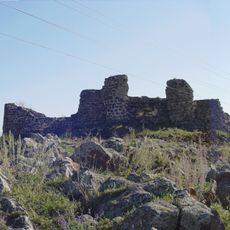
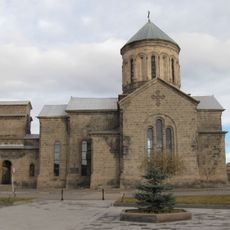
Sevan National Park, National park at Lake Sevan, Armenia
Sevan National Park covers 147,343 hectares including the surface of Lake Sevan, or 22,585 hectares of land alone, with a 342,920-hectare protection belt. The lake, 1,238 square kilometres in area and up to 79.4 metres deep, is split by the Shorzha underwater ridge into Big Sevan and Small Sevan. The park is divided into four zones: reserves, sanctuaries, recreational and economic.
Sevan National Park was created on 14 March 1978 by decision No. 125 of the Central Committee of the Communist Party of Armenia and the Council of Ministers of the Armenian SSR. In 1997 the forest holdings of Sevan, Noratus, Martuni and Vardenis were dissolved and their lands transferred to the park, together with the lakeside resort economy. A 2001 law on Lake Sevan placed the whole park inside the lake's central zone.
The park's Armenian name, Sevan azgayin park, comes from Lake Sevan, whose fish gave the area its fishing tradition; Sevan trout (Salmo ischchan) and Sevan koghak (Capoeta sevangi) spawn in rivers such as the Masrik, and licensed fishing on the lake is regulated by the park administration. The Armenian gull, called "Armenian" in its scientific name Larus armenicus, nests here and is one of the park's two regional endemics.
The park is split into four zones: reserves, sanctuaries, a 4,753-hectare recreational zone and an 11,266-hectare economic zone, so access differs by sector. The four reserves (Norashen, Lichk-Argichi, Gilli, Artanish) total 7,464 hectares, of which 3,175 are water. Licensed fishing on the lake is regulated by the park administration.
The Masrik River and its tributaries serve as spawning grounds for the endemic Sevan trout (Salmo ischchan) and Sevan koghak (Capoeta sevangi); young fish remain in these rivers until they are one year old. Both species are listed as endangered in Armenia's Red List.
The community of curious travelers
AroundUs brings together thousands of curated places, local tips, and hidden gems, enriched daily by 93,971 contributors worldwide.