Surb Zoravor Astvatsatsin Church, Church building in Yerevan, Armenia
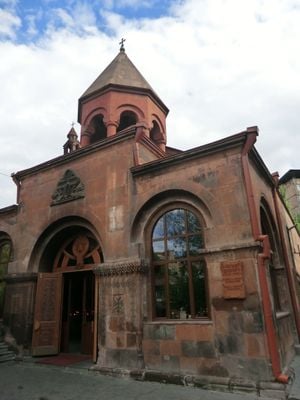
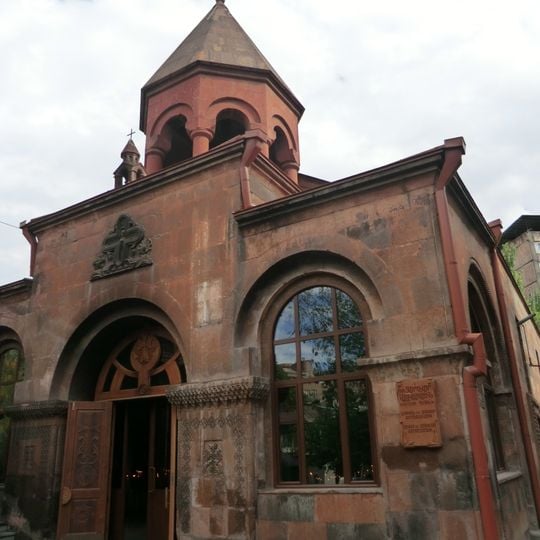
Surb Zoravor Astvatsatsin Church is an Armenian church building featuring a three-nave basilica structure without a dome, located in central Yerevan. Decorative religious stones from the 17th century are incorporated into its exterior walls, adding visual interest to the facade.
Monk Movses Syunetsi founded a walled monastery with a school here in the 1620s, backed by Yerevan's residents and New Jugha merchants; its buildings were destroyed in the 1635–36 Ottoman-Persian war and rebuilt in stone by Catholicos Philip I in 1637. The earthquake of 4 June 1679 levelled the complex, and in 1693–94 the wealthy Khoja Panos funded the present church on the same spot.
The name Zoravor, meaning "Powerful", was added because the church housed the 13th-century Zoravor Bible. The building was previously known simply as Surp Astvatsatsin, Holy Mother of God. A carved relief of a cross above the entrance and 17th-century khachkars set into the walls are visible on the exterior.
The church stands enclosed between Pushkin and Tumanyan streets, hemmed in by multi-storey residential blocks, so it is reached on foot through the surrounding courtyards. The main altar is at the eastern end of the prayer hall, with vestries at its northern and southern corners; the three-vaulted porch with decorative columns opens on the western side. A stairway on the eastern flank of the 1889 Saint Ananias chapel leads down to the saint's graveyard.
The chapel over Saint Ananias's tomb stands on the church's northeastern side, reached by stairs, and was built in 1889 with funds from deputy M. Sargsyan. The same renovation opened a new door on the south side and rectangular windows in the facades, changes the Armenian sources call unsuited to the building's style.
The community of curious travelers
AroundUs brings together thousands of curated places, local tips, and hidden gems, enriched daily by 92,993 contributors worldwide.