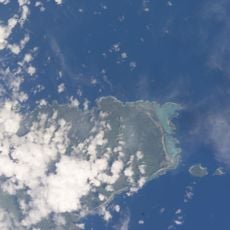
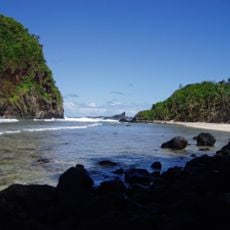
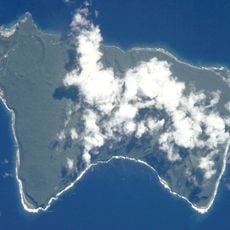
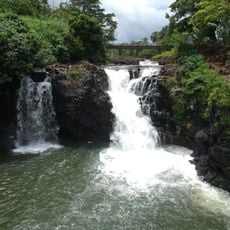
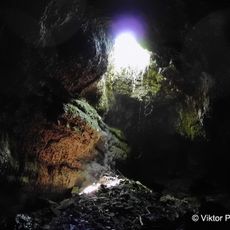
Mount Matavanu, Active volcano in Savai'i, Samoa.
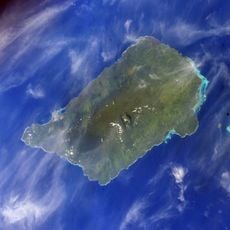
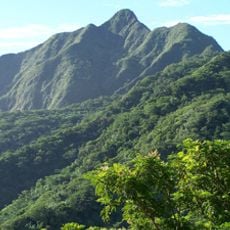
Mount Matavanu is an active volcano on the north flank of Savaiʻi in Samoa's Gagaʻemauga district. Its crater rim reaches 708 metres, about eighty metres above the surrounding land, as measured by volcanologist Immanuel Friedlaender in 1907. Lava from the 1905–1911 eruption covers roughly 50 square kilometres around the cone.
The volcano erupted between 1905 and 1911, producing lava flows that transformed the surrounding landscape and forced several villages to relocate to Upolu island. This eruptive phase had lasting effects on local settlement patterns and communities.
The name Matavanu combines two Samoan words: mata means eye and vanu means valley, reflecting how the local language describes this volcanic shape.
The crater rim stands at 708 metres, as measured by volcanologist Immanuel Friedlaender during his 1907 visit, about eighty metres above the surrounding land. The 1905–1911 flow reached the north coast in early 1906 and later formed a lava lake in the crater. Access is on foot over old lava and forest tracks, so allow time and take a local guide.
In 2022 Mount Matavanu received recognition from the International Union of Geological Sciences as one of 100 geological heritage sites of global importance. This designation highlights its scientific significance among volcanic sites worldwide.
The community of curious travelers
AroundUs brings together thousands of curated places, local tips, and hidden gems, enriched daily by 92,780 contributors worldwide.