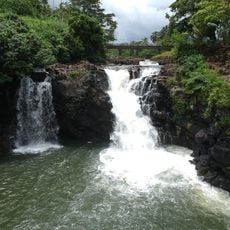
Cape Taputapu, National Natural Landmark on Tutuila Island, American Samoa
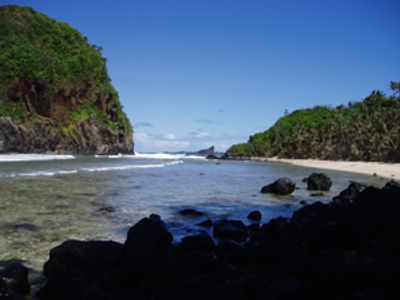
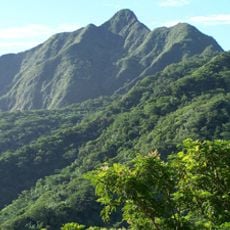
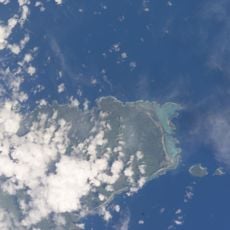
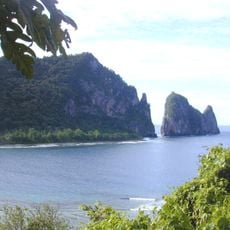
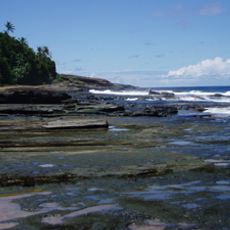
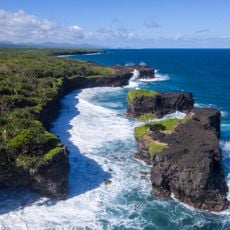
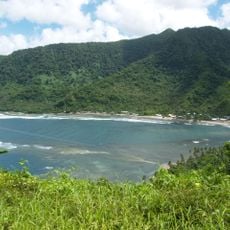
Cape Taputapu is a peninsula on Tutuila Island featuring roughly 170 acres of rocky coastal land shaped by volcanic activity and powerful ocean waves. Natural blowholes punctuate the landscape where water surges through the ancient rock formations.
The National Park Service designated this peninsula as a National Natural Landmark in 1972 due to its distinctive geological formations. The recognition acknowledged the site's scientific value and role in protecting important natural features of American Samoa.
The name Taputapu refers to the paper mulberry trees that early inhabitants found and cultivated in this location for making traditional bark cloth. The place remains tied to these botanical roots in local memory.
Visit during low tide to safely explore the rocky coastline and access the tidal areas where marine life gathers. The National Park office can provide guidance on trail conditions and the best routes through the volcanic terrain.
A colony of fruit bats inhabits the rocky areas and plays an important role in pollinating local plants. Watching these animals in their natural environment during twilight hours offers an unexpected encounter with the island's wildlife.
The community of curious travelers
AroundUs brings together thousands of curated places, local tips, and hidden gems, enriched daily by 91,369 contributors worldwide.