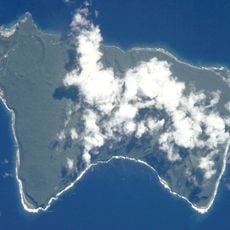
Rainmaker Mountain, National Natural Landmark in Aʻumi, American Samoa
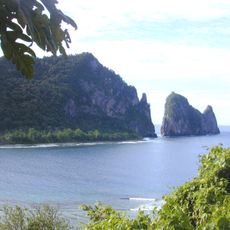
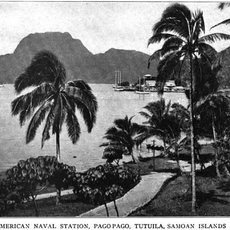
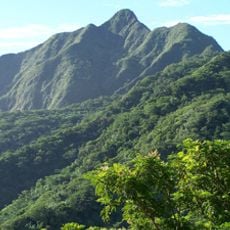
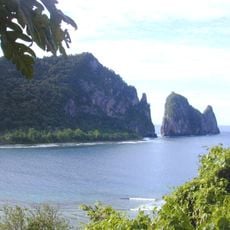
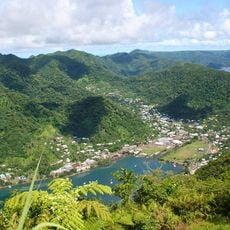
Mount Pioa rises to about 523 meters with three separate peaks and creates regular cloud formations over Pago Pago Harbor. The mountain is capped with tropical rainforest vegetation clinging to steep slopes and rocky ridges that characterize its volcanic structure.
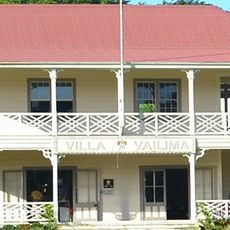
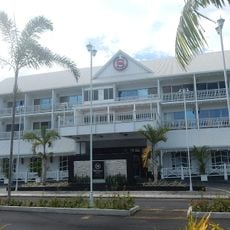
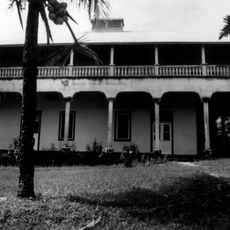
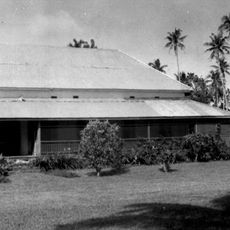
Rainmaker Mountain is a quartz trachyte volcanic plug, an endogenous dome about 720 m long and 515 m high, formed when magma pushed up into a vent roughly 2 km across and erupted red, white and black pumice. In 1972 the summit and slopes above 243.8 m, an area of 0.688 km², were designated a National Natural Landmark. At the mountain's base stood the 250-room Rainmaker Hotel, the country's only state hotel; in 1980 a US Navy aircraft crashed into it, killing six servicemen and two tourists, and the buildings were demolished in late 2014.
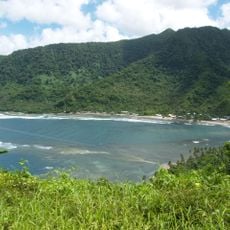
The name Rainmaker comes from the mountain's habit of catching passing clouds and concentrating them, which often brings rain to the Pago Pago area; average annual rainfall on the mountain is about 200 inches (5,080 mm). Samoan legend and lore attach to the peak, and it is known as Mount Pioa or Mount Peiva. Villages ring its base, including Afono, Aua, Lauli'i, Aumi and Alega.
The main hiking routes start near Pago Pago Harbor and lead upward to the three peaks with varying difficulty levels. Visit during drier months when the trails are more stable, as moisture and mud can make routes slippery and challenging.
The summit holds a cratered pumice cone formed when pasty lava erupted and partly filled the crater area, and columnar jointing is visible where lava cooled at right angles. The dome itself is about 300 m wide and 720 m long, pushed up into a vent roughly 2 km across.
The community of curious travelers
AroundUs brings together thousands of curated places, local tips, and hidden gems, enriched daily by 93,635 contributors worldwide.